A practical guide to checking accommodation, access, dining and venue services separately when planning an Adelaide casino visit.
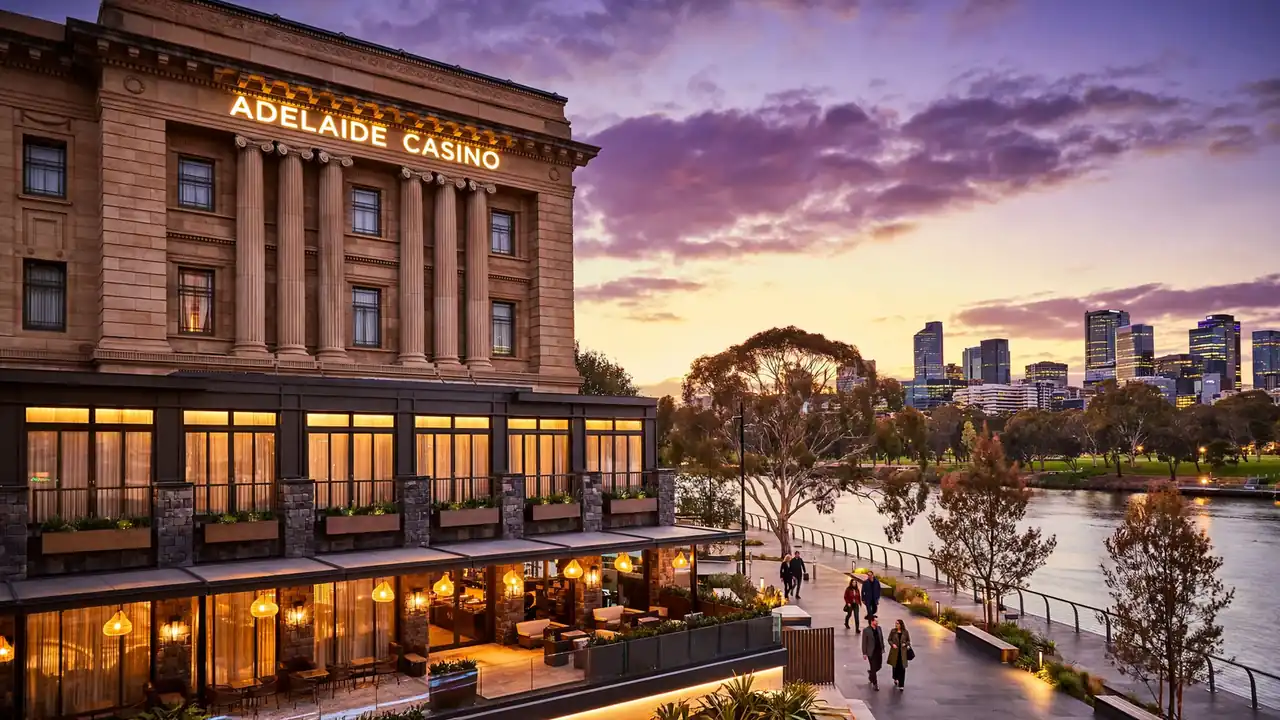
A casino can be part of an Adelaide itinerary without being the place that provides the accommodation. The distinction matters when comparing a stay built around a casino visit with a hotel booking that includes casino access or services. A venue name in a travel plan does not, by itself, establish that rooms are available there, that a hotel package exists, or that a room rate includes anything beyond lodging.
The phrase “Adelaide casino hotel” can refer to two different arrangements: a hotel operated as part of a casino property, or a hotel stay planned around visiting a casino elsewhere. Those are separate propositions and need separate confirmation. Before treating a casino as the accommodation itself, check whether the venue currently offers rooms and whether the booking is made directly with the venue or through a distinct hotel provider. Without that confirmation, “casino hotel” is only a description someone has used, not a booking condition.
For a stay-centred plan, the practical question is how the casino visit fits alongside the rest of the trip. It may be one evening’s activity, a reason to schedule time in the city, or a stop within a broader itinerary. None of those uses requires the casino to be the hotel. Keeping the visit and the overnight booking as separate line items makes the actual cost and terms easier to assess: accommodation has its own price, cancellation conditions and inclusions; casino access or activity should not be assumed to come with it.
Choosing a casino for Adelaide in 2026 means weighing the details that are actually available, such as licensing and stated payment terms. Use these notes as a concise reference when deciding which options to explore further.
7Bit Casino
7Bit Casino is operated by Dama N.V. and holds a Curacao license.
Wild Tokyo
Wild Tokyo holds a Curacao license and lists a minimum deposit of A$10. Its stated payout times are 30–60 minutes for crypto and 1–5 days for fiat.
SkyCrown
SkyCrown is licensed by the Tobique Gaming Commission. It lists crypto payouts at approximately 10–15 minutes, fiat payouts at 1–5 days, and a minimum deposit of A$30.
Neospin
Neospin is licensed by the Curacao Gaming Control Board under OGL/2023/176/0095, with Hollycorn N.V. named in its licensing details.
Uptown Pokies
Uptown Pokies is listed as operating since 2017 and holds a Curacao license. Its stated minimum deposit is A$20.
WinSpirit Casino
WinSpirit Casino holds a Curacao eGaming license, OGL/2024/923/0383, with Antillephone N.V. named in its licensing details. Its minimum deposit is A$30.
DragonSlots Casino
DragonSlots Casino is licensed by the Curacao Gaming Authority, with Jumpman Gaming Ltd named in its licensing details.
Thor Casino
Thor Casino is licensed in Curacao through Antillephone N.V., with Versus Odds B.V. named in its licensing details. Its stated minimum deposit is EUR 20.
Vegaz Casino
Vegaz Casino holds a Curacao license, OGL/2024/1335/0780. Its stated minimum deposit is EUR 20.
LuckyVibe
LuckyVibe is licensed by the Curacao Gaming Control Board under OGL/2023/176/0095, with Hollycorn N.V. named in its licensing details.
Claims about casino hotel deals need the same separation. A package title can sound comprehensive while leaving important details outside the headline. The booking terms should identify what is included, which provider is responsible for the room, and what restrictions apply. If the offer does not set out those conditions, its value cannot be calculated. A promotional label is not a substitute for an itemised inclusion.
Room searches require particular care because the wording can imply inventory that may not be available. A page discussing a casino and hotels in the same context does not prove that the casino sells rooms, and a hotel listing that mentions the casino does not establish a formal partnership. Availability, room details and booking conditions can change; they should be confirmed with the party that will actually take the reservation. Rates and room categories should not be inferred from general venue descriptions.
Opening hours are another independent part of the plan. A hotel booking does not establish when the casino is open, and a casino’s hours do not establish when hotel check-in or other services operate. Hours can also differ by activity or service. For a particular date, the current schedule should be checked through an official venue channel before travel arrangements are fixed. A search result, old itinerary or third-party listing may not reflect a later change.
The cleanest way to compare options is to record the accommodation booking and casino visit separately. For each stay, confirm the provider, dates, total price, included services and cancellation terms. For the casino visit, confirm the venue’s current operating information independently. This avoids treating proximity, branding or a package name as proof of a room, a deal or a particular opening time.
For anyone planning a visit under the heading “best casino in Adelaide 2026,” the stay decision is therefore not a ranking exercise. It is a question of which arrangements are actually confirmed for the intended dates, and which costs belong to the hotel rather than the casino. Keeping those distinctions visible leaves fewer assumptions to settle after a booking has been made.
Accommodation near Adelaide Casino is a lodging decision, not evidence that a room is part of the casino or sold by its operator. A property described as being near the venue may be independently run, with its own booking conditions, facilities and cancellation rules. Proximity alone does not establish a hotel relationship, a package or a shared offer.
For a useful comparison, treat the casino’s location as a reference point and assess each accommodation listing on its own terms. Confirm the property’s address and map position, then check the route and transport arrangements that matter to the stay. A label such as “near the casino” is not a measured journey time. Without a confirmed address and route, it cannot support a reliable estimate of how long getting there will take.
Searches for Adelaide casino accommodation deals can also combine two separate things: a room rate and a casino promotion. A lodging discount may be offered by the accommodation provider; a venue promotion may have different eligibility, dates or conditions. Neither should be assumed to include the other. Before booking, check who is selling the room, what the quoted price covers, when the offer applies and whether cancellation or payment terms change the final cost. The word “deal” is packaging until its conditions and total price are clear.
A practical comparison should keep the same basis across options. Record the accommodation cost for the intended dates, any mandatory charges shown before payment, the cancellation terms and the location relative to the venue. If those details are not visible, the price is not yet comparable. A low headline rate with unclear conditions is not a saving that can be calculated.
Venue information should be checked separately from lodging information. Opening times or trading hours describe when the venue operates; they do not confirm room availability, a hotel check-in arrangement or a late arrival policy at a nearby property. Likewise, references to gaming machines or poker machines say nothing about accommodation inventory. These are different categories of information, and combining them in one listing does not make them one service.
The same distinction applies when a page mentions casino promotions beside accommodation. A promotion should be assessed according to its stated terms, while a room booking should be assessed under the accommodation provider’s terms. Do not treat a mention of one as proof that the other is included. If a package is advertised, its inclusions, dates and booking conditions need to be stated by the seller before it can be valued.
The cleanest approach is to identify the venue location, select accommodation independently, and verify the details with the party responsible for each booking. That keeps room costs, travel planning and any venue offer in separate columns. It also prevents a nearby property from being mistaken for casino-owned accommodation simply because the two appear together in a listing.
Poker-related searches around Adelaide can refer to different things: a dedicated poker room, a cash game, a scheduled tournament, or simply poker offered as part of a casino visit. Those are not interchangeable. A room describes a venue or playing area; a tournament describes a format with its own entry conditions, start time and rules. A result mentioning one does not establish the others.
For anyone assessing poker at an Adelaide casino, the useful details are operational rather than promotional. A current listing should identify whether poker is running, which format is available, when registration opens and closes, and what the event’s entry conditions are. For a tournament, the structure and rules matter alongside the advertised start time: late registration, re-entry, prize distribution and cancellation terms can change the practical value of an event. These particulars need to be checked against current venue information before travel is planned around them.
A poker-room listing also needs to be distinguished from a general casino-floor description. A poker table somewhere on a gaming floor would not, by itself, establish a dedicated room, regular cash games or a tournament calendar. Likewise, a past tournament notice is evidence of a past event, not a current schedule. Dates and operating details are the parts most likely to become stale, so older listings should not be treated as an active commitment.
Attention: A poker table on a gaming floor does not establish a dedicated room, regular cash games, or a current tournament calendar.
The phrase “casino rooms” can also point to accommodation rather than poker facilities. In a poker context, “room” may mean a playing area; in a stay-planning context, it may mean a hotel room. The surrounding details clarify which is intended. Tournament registration, game formats and table availability belong to poker information. Room rates, check-in and lodging belong to accommodation information. Keeping those categories separate prevents a search result from being mistaken for a description of the casino’s gaming facilities.
Queries about a casino’s opening status require the same attention to timing. “Open today” or “open now” is not enough to establish that poker is operating at that moment. Venue hours, gaming-floor hours and poker availability may be separate operating details. A venue can be open while a particular game or event is not running. The relevant confirmation is therefore the current status of the poker activity itself, rather than a general opening label.
A sports bar appearing alongside poker in a search result is another distinct category. A bar listing does not confirm poker-room access or tournament activity, just as poker information does not establish bar facilities or current service. Each detail should be checked against the specific venue information it describes, rather than inferred from nearby wording.
For a tournament, the most reliable comparison is a compact record of the date, registration status, format, entry terms and any stated changes. For a cash game, the useful checks are whether it is currently offered and what conditions govern seating and play. If those details cannot be confirmed for the planned visit, the practical choice is to avoid building an itinerary around an assumed game. Poker schedules are operational information, not a permanent feature that can be inferred from a casino’s name.
A casino in Adelaide can be considered both a gambling venue and part of the city’s wider visitor economy. That distinction matters when assessing its development. Changes to a venue may affect its public role, but a search for development news does not establish what has been approved, completed or opened. Those are separate claims, each requiring a current, attributable announcement.
The same caution applies to descriptions of the venue’s place in the city. Its significance cannot be measured from a name or a headline alone. Useful context would include what has changed, when the change took effect, and whether the information concerns the casino itself or a broader development. Without those details, “development” is a label rather than a reliable account of what has happened.
Entertainment and events are also distinct from gambling facilities. A venue may be associated with public-facing activity, but that does not confirm a particular performance, event calendar or programme. Dates, line-ups and admission conditions can change, so an event should be treated as confirmed only when current venue information identifies what is scheduled and when.
This distinction keeps general descriptions from being mistaken for a booking. A reference to entertainment does not, by itself, establish that a show is running or that a particular event is open to the public. For planning purposes, the useful information is the specific event notice, including its date and any stated conditions. Without that, there is no sound basis for assuming an event is available.
The casino’s role in Adelaide can therefore be understood without assigning it an unverified programme. It is a venue with a public profile; the precise activities attached to that profile need to be checked individually. Broad promotional language may describe an intended role, while an event listing describes a specific, time-bound occurrence. Those are not interchangeable.
Questions about whether the Adelaide casino is open, has reopened or is reopening call for a clear status and a date. These terms refer to different situations: ongoing operation, a return after a closure, or a planned future return. A headline using one of them is not enough to establish which situation applies. Current operating information should take precedence over older notices or undated references.
Where an opening or reopening is discussed as part of development, the relevant details are the effective date, the area or service affected, and whether the notice describes a completed change or an intention. A partial change should not be read as confirmation that every part of a venue has resumed activity. Precision here is practical, not pedantic: status can change while older material remains accessible.
Employment is another part of the venue’s public and economic context, but it should not be inferred from a development announcement. A project does not confirm that roles are available, and a general reference to employment does not establish a vacancy, job type or application status. Current recruitment information is the appropriate basis for those decisions; the venue’s broader profile is not a substitute.
Taken together, development, events, opening status and employment describe different aspects of the casino’s place in Adelaide. Each requires evidence suited to the claim: a development update for a project, a current listing for an event, a dated notice for an opening change, and an active vacancy notice for a job. Keeping those categories separate avoids turning general venue context into a promise of a specific activity or opportunity.
Parking is a practical part of a visit to an Adelaide casino venue; it does not establish anything about online gambling. The venue’s current parking arrangements, access conditions and any charges should be checked through its official information before setting out. No space, price or parking option should be assumed from the word “casino” alone. These details can change, and a search result that refers to parking may describe a nearby facility rather than parking operated by the venue.
The same distinction applies to searches that combine Adelaide with bingo, dining or lunch. Those terms concern activities or services associated with a physical location. They do not show that an online casino is available to people in Australia, nor do they establish that a particular amenity is operating. A venue and a website may use similar language while being subject to different rules and conditions.
An Adelaide casino is a physical venue. An online casino is a service delivered over the internet, and the legal position is not transferred from one to the other. Under the Interactive Gambling Act, an Australian-run online casino cannot offer online casino games to people located in Australia. A venue’s existence or licence therefore cannot be treated as permission for an Australian operator to provide those games online.
Legal Restriction
Under the Interactive Gambling Act, Australian-run online casinos cannot offer online casino games to people located in Australia.
Offshore platforms are not regulated under Australian law. Their accessibility can also depend on location: an online casino may use a player’s IP address to identify the apparent country of access and block games or providers for that region. As a result, a site or game may not be available from an Australian connection. That restriction is a technical access control, not evidence that the service is authorised locally.
Using a VPN to make an Australian connection appear to come from another country does not change the legal status of the service. It can breach a platform’s terms and may lead to account suspension. A location change also does not supply Australian regulatory oversight or resolve a dispute with an offshore operator. Treating access as proof of approval would confuse a technical possibility with a legal status.
The phrase “casino licence in Adelaide” can refer to the regulation of a physical venue, while an online-casino licence may be issued elsewhere and does not make an offshore platform regulated in Australia. These are separate questions. A venue’s local status should be checked with the relevant official authority; it should not be used as a shortcut for assessing an internet service.
For planning a visit, parking information belongs with the physical venue’s current access details. For online gambling, the relevant distinction is that Australian-run online casino games cannot be offered to people in Australia, while offshore platforms sit outside Australian regulation and may restrict access by country or IP address. The two subjects share a word, not a set of permissions.
Contact details should come from the venue’s own current information, not from an old directory listing or an unverified map entry. A phone number can be useful when a detail needs confirmation before a visit, but a number copied across several third-party pages is not evidence that it is still active. The same applies to email addresses, enquiry forms and social accounts: confirm that the channel is official before sharing personal information or relying on a response.
A request about the Adelaide casino’s contact number should therefore be checked against an official venue page or a current listing maintained by the venue. If those sources differ, the discrepancy matters; an unanswered call to a stale number does not confirm that a service is unavailable. For a time-sensitive question, use a current official channel and retain the response or confirmation.
Questions about a bar, baccarat, craps or car parking are separate enquiries, even when they concern the same venue. The wording should identify the information needed: whether a facility or game is currently available, any applicable access conditions, and whether details change on the intended date. No bar, table game, parking facility or particular operating arrangement should be assumed from a name appearing in a directory or on a map.
This distinction is practical rather than technical. A general contact page may route a question, but it may not establish whether a specific table game is operating, whether parking arrangements have changed, or whether a particular bar is open at a given time. Direct confirmation from the venue is the stronger basis for planning. If the reply is general, a more precise follow-up may be needed before treating the point as settled.
Concert-related questions also need to be framed narrowly. A venue contact channel can clarify whether an event is listed or where current event information is published; it should not be taken as confirmation that a concert is scheduled. Event information can change, so an old listing or an undated map pin is a weak basis for making arrangements.
A map can help locate a venue or identify an entrance shown by the map provider, but it is not a substitute for current venue information. Pins and labels may be user-submitted, duplicated or out of date. For a car park, entrance or access point, check that the information is associated with the venue’s official material before relying on it. This is particularly relevant when the route depends on a specific entrance rather than simply reaching the general address.
The useful outcome of a contact check is a clear answer tied to the question: the relevant service or facility, the date it applies to, and any conditions the venue states. Where those details are not confirmed, the status remains unconfirmed. That is more reliable than treating a search result, map label or old phone listing as a current promise.
Breakfast, buffet, resort, rewards and employment information are different categories, not parts of one bundled offer. A reference to an Adelaide casino does not establish that a particular meal, programme or vacancy is currently available. Each claim needs its own current confirmation before it is used to plan a visit or assess an opportunity.
A breakfast listing should specify the service, the dates it applies and any conditions for access. A buffet breakfast is a more specific claim than breakfast alone: the format, serving period and eligibility may differ from other food service. A general mention of a buffet does not confirm that breakfast is included, that it is open on a particular day, or that access is available to every visitor.
The same distinction applies to broader buffet references. A venue can change its offering or hours, and a dated page may remain visible after the information has changed. Current venue information is the relevant basis for a decision; an old review or a third-party listing is not confirmation of today’s service. These checks concern whether a meal offer exists and under what terms, not nearby dining alternatives.
“Resort” can describe a property or a package, but the word alone does not establish what facilities or services are included. Any such claim should be read against the actual offer: what is available, who qualifies, and whether access depends on a booking or other condition. Without those details, the label has little practical value.
Rewards require the same separation between name and terms. A programme should be assessed by its eligibility rules, the benefits it states, how those benefits are earned and any limits on use. A rewards reference is not evidence of a guaranteed saving, complimentary service or current membership offer. Venue benefits and online gambling bonuses are also not interchangeable.
Online bonus terms may attach wagering requirements to promotional winnings. A specialist review reports one condition under which winnings from free spins must be wagered thirty times before withdrawal. That is a report about a particular bonus condition, not a venue reward or a universal rule. Any bonus assessment depends on the applicable terms, including how winnings may be used and whether withdrawal is restricted.
Job listings need separate verification from visitor offers. A past vacancy, an undated recruitment page or a general description of casino work does not establish that a position is open now. A useful listing identifies the role, employer, location, application method and closing date; those details should be checked against the current recruitment information before an application is prepared.
The same test applies to claims about jobs at an Adelaide casino: confirm that the vacancy is active and that the stated employer is responsible for it. Do not treat a general careers page as a live opening, or infer employment conditions from a job title alone. Breakfast access, rewards eligibility and recruitment status each depend on separate terms; one does not verify another.
A spa listing attached to a casino name can refer to a separate business, a nearby facility or an amenity within a larger complex. The label alone does not establish which applies. Before treating a day spa as part of a casino visit, confirm the operator, location, booking arrangements and current services through the venue’s own information. If those details are not clearly connected, the spa should be planned as a separate stop rather than assumed to be a casino facility.
The same distinction matters for practical venue details. An address should be checked against the specific entrance or building being visited, not copied from an old directory entry that may describe a broader precinct. Current venue information is the more useful reference for navigation; a map result can help identify the location, but it does not establish access arrangements or the status of an amenity.
Bars, dress expectations and available games are also details that can change or depend on the area being visited. A general venue name does not confirm that a particular bar is operating, that a specific dress policy applies across all spaces, or that a game is available at a given time. Those points are best treated as separate checks, with the relevant area or activity identified rather than inferred from a broad listing.
Careers information needs its own verification as well. A venue’s public presence does not establish that it has vacancies, which roles are open or how applications are handled. Employment details should come from the organisation’s current recruitment channel, where role descriptions and application instructions can be assessed directly. An old listing or third-party summary is not evidence of an active position.
A practical check can be kept narrow:
This approach avoids turning a name association into a promise of facilities or services. It also keeps unrelated arrangements from being bundled together: a spa booking, a visit to a bar, a game and a job application each have different terms and a different source of confirmation. When a detail cannot be matched to current venue information, it should remain unassumed rather than treated as included.
A restaurant search connected with the Adelaide casino can refer to two different plans: dining inside the venue or choosing a restaurant nearby. Those are separate decisions. A result that places a restaurant near the casino does not establish that it is part of the venue, while a casino-related listing does not by itself confirm that the restaurant is currently operating.
For dining at the venue, the useful details are practical: whether the restaurant is open on the intended date, whether a booking is needed, what service is available at the relevant time and whether any entry conditions apply. Menus and hours can change, so older listings are a weak basis for planning. Current venue information is the appropriate place to confirm them before making a reservation or arranging an evening around a meal.
“Restaurants at the casino” and “restaurants near the casino” should not be treated as interchangeable categories. The first concerns the venue’s own dining offer; the second can include independent businesses in the surrounding area. A map pin or short description may not make that distinction clear. Checking the business’s own current listing helps establish its location, opening status and booking arrangements without assuming that it is operated by the casino.
The phrase “Adelaide casino restaurant” also does not identify a particular cuisine, price level or dining format. Those details need to be checked against a current menu and the restaurant’s own information. Where a menu is not available or may have changed, a specific meal, dietary option or cost should not be assumed. The same applies to special occasions: availability, seating and any booking conditions are matters to confirm directly.
A rooftop bar is a separate amenity question, not proof of a restaurant or dining service. The words “casino rooftop bar” alone do not confirm that such a venue exists, that it serves meals, or that it is open to the public. Any plan relying on a rooftop setting should therefore be based on current venue details rather than an old listing, photograph or search result.
For a straightforward comparison, record the venue name, whether it is on-site or nearby, the date checked, opening hours, booking method and the menu information relevant to the occasion. This keeps the decision focused on verifiable details instead of treating proximity as affiliation or an appealing description as confirmation. The restaurant choice can then be assessed on its actual terms: location, service, menu and availability.
Food-related searches can refer to more than a restaurant. They may concern quick service, takeaway, refreshments or a shared food area, each of which is a separate amenity to confirm. A search for food at the Adelaide casino does not establish that a food court operates there, or that any particular service is open during a planned visit.
The useful distinction is between a general food-service facility and a named dining venue. Details such as what is available, where it is located and when it operates can change. An older listing or an undated page may therefore describe an arrangement that no longer applies. Current venue information is the relevant basis for planning; an assumption based on the word “casino” is not.
Pool searches need the same separation between a facility and an expectation. A pool is not implied by casino access, an entertainment venue or nearby accommodation. Nor does a result mentioning a pool establish that it belongs to the casino itself. The location and operating status need to be clear before the facility is treated as part of a visit.
Food and pool information should be checked independently because one amenity says nothing about the other. A venue may have food services without a pool, or a pool may be associated with a different property. Broad labels can blur those distinctions, particularly when listings combine several facilities in one description.
For practical planning, confirm the specific service or facility, its location and whether it is available on the intended date. If those details are not stated clearly, they should not be built into the visit plan. That is a more reliable basis than treating a food-court or pool reference as proof of an on-site amenity.
Free-spin winnings must be wagered 30 times before withdrawal; free-spin wagering requirements commonly range from 20x to 50x. Pokies typically contribute 100% toward wagering requirements.
Yes. Australian-based operators cannot offer online casino games such as pokies, blackjack and roulette to people in Australia. Offshore sites may be accessible, but they are not regulated under Australian law, and operators or game providers may block access from Australian IP addresses.
Club Liverpool has the highest number of operational poker machines among clubs in NSW.
NSW requires players to set a loss limit before playing through mandatory pre-commitment systems.