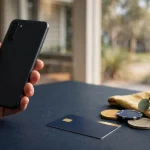
Android casino play in Australia usually happens in a browser, with access, payments and account conditions varying by service.

An Android phone does not necessarily need a dedicated casino application for mobile access. In Australia, the usual arrangement is to open the casino’s website in a mobile browser. The website is the point of access; the handset does not need to have a casino app installed from an app marketplace.
That distinction matters because searches for an Android casino app can create the expectation that a native download is the standard route. It is not. Casino applications are seldom available through Google Play or Apple’s App Store in Australia, making browser access the practical default. The absence of a listing does not, by itself, explain an operator’s access policy or establish that its service is suitable for Australian use.
With browser play, the casino website is opened directly on the Android device. The account used there is generally the same one used on a desktop computer. There is no separate mobile account implied by the change of screen: mobile access is another way to reach the existing account.
Choosing an Android casino app in Australia means checking the available operator information as well as whether the option suits your priorities. These verdicts highlight the specific details provided for each operator.
7Bit Casino
7Bit Casino is licensed in Curacao and operated by Dama N.V.
Wild Tokyo
Wild Tokyo lists a minimum deposit of A$10. Its stated payout times are 30–60 minutes for crypto and 1–5 days for fiat.
SkyCrown
SkyCrown is licensed by the Tobique Gaming Commission. Its stated payout times are around 10–15 minutes for crypto and 1–5 days for fiat, with a A$30 minimum deposit.
Neospin
Neospin is listed under Curacao Gaming Control Board licence OGL/2023/176/0095, held by Hollycorn N.V.
Uptown Pokies
Uptown Pokies is described as operating since 2017 and lists a A$20 minimum deposit. Its stated licence is from Curacao.
WinSpirit Casino
WinSpirit Casino lists a A$30 minimum deposit. It is licensed under Curacao eGaming licence OGL/2024/923/0383, held by Antillephone N.V.
DragonSlots Casino
DragonSlots Casino is listed as licensed by the Curacao Gaming Authority, with Jumpman Gaming Ltd named as the licensee.
Thor Casino
Thor Casino is listed under a Curacao licence associated with Antillephone N.V. and Versus Odds B.V. Its stated minimum deposit is EUR 20.
Vegaz Casino
Vegaz Casino lists a Curacao licence, OGL/2024/1335/0780, and a minimum deposit of EUR 20.
LuckyVibe
LuckyVibe is listed under Curacao Gaming Control Board licence OGL/2023/176/0095, held by Hollycorn N.V.
For someone moving between devices, this means the relevant distinction is the access method, not a different account category. A punter may use a desktop browser at one time and a phone browser at another, while signing in to the same account. The phone is not, on that basis alone, tied to a unique version of the account.
This is the ordinary meaning behind phrases such as “online casino for Android”: access through a website that can be opened on an Android device. It does not necessarily refer to an application downloaded from Google Play. Likewise, “mobile casino” describes the device used to reach the service; it does not establish that a separate Android product exists.
A browser route also avoids treating app-store availability as a test of whether a casino has a mobile website. Since casino apps are rarely listed in the major stores in Australia, an empty store search is not unusual. The site itself may still be accessible through a mobile browser, though access arrangements differ between operators.
Using the same account on a phone and desktop keeps the basic account relationship consistent across devices. The mobile browser is an access point, not necessarily a second account or a separate product. That is the practical default for Australian mobile casino use.
The word “app” can obscure this. In everyday use, it may refer to any service opened on a phone, but technically it can mean a native application installed on the device. For casino access in Australia, those meanings should not be treated as interchangeable. A casino website viewed in a browser is still website access, even when the page is being used on an Android phone.
This also explains why searches for the best pokies app for Android may not lead to a familiar app-store result. The common arrangement is browser-based rather than an app-store download. A result that uses app language may be describing mobile access broadly, rather than confirming that a native application is available through Google Play.
Google Play and the Apple App Store are not the default distribution route for casino apps in Australia. Because such listings are uncommon, a punter should not assume that a casino must have a store-listed application to offer a mobile website. Nor does finding an app listing, or failing to find one, settle whether an operator accepts a particular location.
The same caution applies to labels such as “Android casino” or “casino online on Android.” They identify a device context, but do not specify how access is provided. In the usual browser arrangement, the phone’s browser opens the casino website and the existing account is used there. The operator’s actual access conditions remain a separate matter.
The key distinction is straightforward: mobile use in Australia is commonly browser-based, while dedicated casino apps are rarely found in the major app stores. The mobile experience therefore often begins with the website rather than an installation.
The legal distinction is between the conduct of an operator and the position of an individual punter. Under the Interactive Gambling Act 2001, gambling operators are prohibited from offering online casino-style games to people in Australia. The restriction concerns the service being provided: it is not made lawful by delivering it through an Android app, a mobile website or another online format.
Legal Restriction
Under the Interactive Gambling Act 2001, operators are prohibited from offering online casino-style games to people in Australia, regardless of the access format used.
For an Australian considering a casino app for Android, the practical point is that the app’s availability does not establish that its service may lawfully be offered in Australia. The Act applies to the operator’s provision of the gambling service, rather than turning the presence of an app on a phone into evidence of government approval. A site’s own statements about its availability cannot change that legal position.
The Act treats online casino-style gambling as a prohibited interactive gambling service when it is provided to customers in Australia. That covers casino-style games offered online, whether accessed from a phone or another device. The format is not a legal workaround: an app does not create a separate category that escapes the operator restriction.
The same Act does not make it illegal for an individual Australian player to play at an offshore mobile casino. That is a narrower point than saying that offshore casino apps are legal or approved in Australia. The prohibition on operators and the absence of individual liability under this Act are separate parts of the legal position; neither cancels the other.
This distinction matters because “not illegal for the player under the Act” is sometimes read as a general assurance. It is not one. It does not mean that an offshore operator has permission to offer casino-style games to Australians, and it does not amount to government endorsement of a particular casino app for Android. Nor does it confirm that a particular service is available, reliable or protected by Australian oversight.
A punter assessing a casino for Android therefore needs to keep the two questions separate: whether the operator is permitted to provide the service in Australia, and whether the individual is made liable under the Interactive Gambling Act for using an offshore service. The answer to the first is that the Act prohibits operators from offering these games to users in Australia. The answer to the second is that playing offshore is not illegal for an individual under that Act.
That distinction does not convert an offshore app into an Australian-regulated product. The legal status of the operator’s offer remains the central restriction, even when the player is not personally committing an offence under the same law. “The player is not liable under this Act” and “the service is authorised” are not interchangeable statements.
A person must be at least 18 to register and gamble in Australia. This is an eligibility threshold, not a licence for an operator to provide a prohibited service. Reaching that age does not override the Interactive Gambling Act 2001 or make an offshore casino app officially approved for Australian use.
The distinction is straightforward but easy to blur in app descriptions: age eligibility concerns who may gamble; the Act’s prohibition concerns what operators may offer to people in Australia. Neither an adult account nor the ability to open an app changes the operator’s legal position.
Eligibility vs Legality
Age eligibility (18+) concerns who may gamble, while the Interactive Gambling Act concerns what operators may lawfully offer to people in Australia.
Accordingly, a search for the best casino app for Android in Australia should not be read as a sign that the government recognises a lawful local market for real-money online casino games. The relevant legal facts are limited and clear: operators are prohibited from offering those games to users in Australia, individual play at offshore mobile casinos is not illegal under the Act, and registration and gambling are restricted to adults aged 18 or over.
Free-play and social casino apps are a separate category from real-money gambling. They use virtual credits for play rather than accepting a cash stake on each turn. That distinction matters more than the app’s casino-style presentation: a balance displayed on screen is not a bank balance, and credits should not be treated as money available to withdraw.
In Australia, social and free-play casino apps that use virtual credits are legal to use and are available through the Google Play Store and Apple App Store. Their presence in an official store does not make them real-money gambling services or indicate that their credits have cash value. It identifies the format: a free-play product operating within an app, not a route to a cash payout.
Virtual credits are the units an app uses to record activity. A player may spend them during play, and the app may display a remaining balance, but that figure is internal to the product. It is not an account of cash deposited or winnings owed. The word “balance” can look familiar; the underlying asset is not.
This is the central difference between free-play apps and real-money casino-style play. In a free-play app, the credits are part of the entertainment experience. A displayed total does not establish that the credits can be exchanged for cash, transferred to a bank account, or used as a withdrawal claim. Any claim about the value or use of credits needs to be read in the app’s own terms, not inferred from the way the interface resembles a casino.
That distinction also prevents a common category error: an app can imitate the look and sequence of casino play without being a cash gambling product. The visual format alone does not tell whether money is at stake. The relevant point is how the app accounts for participation and whether real money is involved.
The app-store route is straightforward for this category: eligible free-play and social casino apps can be found directly in Google Play or Apple’s App Store. Store availability does not certify a cash-out feature, convert virtual credits into a prize, or make the app comparable to an offshore casino account. The product’s classification depends on its mechanics, not the icon or the store listing.
For an Android user assessing an app, the useful checks are therefore basic: whether play uses virtual credits, whether any payment is connected to those credits, and what the terms say about their use. A promotional screen or a large on-screen total is not a substitute for those details. If the app describes credits as virtual, that is the appropriate basis for understanding the balance.
Free slots for Android may be used as a casual, no-cash format, but the phrase should not blur the line between entertainment and gambling for money. A virtual-credit app is not a method for moving winnings into a real account. Nor does the availability of free-play apps in an app store establish that real-money casino services are available there.
The practical conclusion is narrow: free-play apps offer casino-style entertainment through virtual credits, and that category is available to Australian users through the major app stores. The credits belong to the app’s play system. Their on-screen amount should not be read as cash, a payout entitlement, or evidence of a real-money casino service.
A bonus is not an amount available to withdraw. Its value depends on the conditions attached to it: the wagering requirement, any minimum deposit, the time allowed to complete the requirement, and the rules governing eligible games and withdrawals. A large headline figure can therefore produce a small practical benefit—or none, if the conditions cannot be met.
A specialist review describes welcome-bonus wagering requirements in the 30x to 50x range, with requirements above 40x treated as steep. The multiple is applied to the amount specified in the terms, which may be the bonus alone or the deposit and bonus combined. Those bases produce different totals. The wording matters more than the headline: a punter needs to know exactly which amount must be wagered before the bonus balance, or winnings linked to it, can be withdrawn.
For a simple illustration of the calculation, a 30x requirement applied to a bonus means the required wagering total is thirty times that bonus. If the terms instead apply the multiple to the deposit-plus-bonus amount, the total rises. The illustration is arithmetic, not a statement about a particular offer. Without the calculation base and qualifying rules, the multiplier by itself says little.
A minimum deposit determines how much money must be committed to activate an offer. It should be considered alongside the wagering requirement, not treated as a separate footnote. The relevant question is how much qualifying wagering the combined conditions demand relative to the deposit and bonus—not simply how large the advertised bonus appears.
Game restrictions can change the calculation again. The terms may exclude particular games or count play on different games unequally. Where pokies contribute only partially, the displayed wagering total may advance more slowly than the amount staked. Check which games qualify and how each contributes before valuing the offer.
Expiry dates set the time available to complete wagering. A specialist review reports that some bonuses have clearance periods of 7–10 days; if the deadline is missed, the bonus can be forfeited. That is a deadline, not a minor administrative detail. A requirement that looks manageable without a time limit may be impractical once the permitted period is included.
Cashout caps also affect the final amount. A cap can limit the winnings withdrawable from a bonus even after wagering is completed. The maximum permitted withdrawal, eligible balance and treatment of any remaining funds should therefore be read together. Clearing the requirement does not necessarily mean every resulting dollar is payable.
Before assessing a no-deposit offer or a deposit-based bonus, the terms need to state the wagering base, minimum deposit, eligible games, expiry date and cashout cap. If any of those conditions is unclear, the advertised amount cannot be compared on equal terms with another offer. The same applies to an Android offer: the phone changes the access method, not the arithmetic.
Offshore Risks
Accessing a blocked casino through a VPN may void winnings or lead to account closure, and there is no Australian government body for complaints if an offshore casino refuses payment.
These offers are associated with offshore, crypto-friendly operators, not Australian-licensed casino services. Location acceptance must be confirmed before any deposit. Accessing a blocked casino through a VPN may void winnings or lead to account closure, and there is no Australian government body to complain to if an offshore casino refuses payment. Terms do not remove those risks; they only define the operator’s stated conditions.
Real-money casino-style play on an Android device sits in an offshore context. The Interactive Gambling Act 2001 prohibits operators from providing online casino-style games to people in Australia. Any casino considered in connection with this subject is therefore an offshore, crypto-friendly operator, not an Australian-licensed service or an endorsement of play.
A foreign licence does not make an operator locally authorised. Common jurisdictions associated with casinos that accept Australian players include Curaçao, the Malta Gaming Authority (MGA) and Gibraltar. These names describe where an operator may be licensed; they do not establish that its service is lawful to provide in Australia, that it accepts a particular Australian customer, or that a payment will be honoured.
Access can also be interrupted. The Australian Communications and Media Authority (ACMA) actively blocks illegal gambling sites, so a site that loads at one point may not remain accessible. Blocking is not a technical inconvenience to work around: it is part of the enforcement environment. A browser page or Android shortcut does not change the legal status of the service behind it.
Location acceptance must be confirmed with the operator before any deposit is made. A site that appears to load, or displays payment options, is not evidence that an Australian address is eligible. The same check should establish what happens if the account is later reviewed for location, identity or payment reasons. If the terms exclude Australian residents, depositing first and resolving eligibility afterwards reverses the sensible order of the transaction.
A VPN does not remove that risk. Using one to reach a blocked casino may breach the operator’s conditions; winnings may be voided and the account may be closed. A changed IP address is not a substitute for location acceptance, and it can create an additional dispute about whether the account complied with the site’s rules.
The financial recourse is limited if an offshore operator refuses a withdrawal. There is no Australian government body to complain to that can require an offshore casino to pay winnings. A foreign licence is not an Australian guarantee of recovery, and the operator’s own complaints process remains part of the offshore relationship. That distinction matters most after funds have been deposited, when the practical cost of a dispute is no longer hypothetical.
For that reason, an Android real-money casino should not be assessed by appearance alone. Its offshore status, stated licensing jurisdiction, location terms and rules for account closure all affect the risk. Where Australian eligibility is unclear, the account is not confirmed as accepted; where a site is blocked, bypassing the block can make the position worse. No app format changes those conditions.
A mobile session can fail for reasons that have little to do with the casino account. A specialist review identifies weak connectivity, limited device memory, an outdated browser and excessive background activity as common sources of trouble. These are separate faults, so changing several settings at once can make the cause harder to identify.
Troubleshooting Order
Check Connection
Verify if the signal is stable and if the problem persists across different networks.
Manage Background Apps
Close unused applications to free up device memory and network access.
Update Browser
Ensure the browser is current and clear stored site data if pages render incorrectly.
Restart Device
Perform a full restart to clear temporary activity if the issue remains.
Connection quality is the first check when an Android slot game stalls, fails to load or disconnects. A weak or unstable signal can interrupt the exchange between the browser and the game server. If the problem appears on one connection but not another, the network is a more likely cause than the handset. Repeatedly refreshing a game during an interruption may also leave the session in an unclear state; checking the account or session status before trying again is the more cautious approach.
Device memory affects how many tasks Android can keep active. When memory is limited, the browser may reload a page or close a game that was running in the background. Closing unused apps can free capacity for the browser. If the same interruption continues, restarting the handset can clear temporary activity, although that does not resolve a weak connection or a browser compatibility problem.
The browser itself matters. An outdated version can handle a casino page less reliably than a current one, so browser updates are a practical first step when pages render incorrectly or controls stop responding. Clearing stored site data may help if a particular page continues to misbehave, but it can also sign the account out or remove saved preferences. Login details should be available before doing so.
Background apps can compete for memory and network access. Video, downloads, automatic updates and other active tasks may make a game slower or less stable. Closing them before opening the casino page reduces competing activity; it does not guarantee uninterrupted play, particularly if the connection itself is poor.
A useful troubleshooting order is to check the connection, close unnecessary background apps, confirm the browser is current, then restart the device if the issue remains. Changing one factor at a time makes the result easier to interpret. If the same fault persists across different connections and after basic device checks, the operator’s support channel can clarify whether there is a service-side problem. Avoid repeated deposits or continued play as a way to test a malfunctioning page.
Technical access does not change the legal position. Real-money online casino games are prohibited services for operators to provide to people in Australia. Any casino recommendations elsewhere on the page concern offshore, crypto-friendly operators, not Australian-authorised services; location acceptance must be confirmed before depositing. ACMA blocks access to illegal gambling sites, and using a VPN to reach a blocked casino may void winnings or result in account closure. There is no Australian government body to complain to if an offshore casino refuses to pay.
On an Android device, gambling controls matter because access can stay within reach throughout the day. Responsible-gambling controls described in specialist casino reviews include deposit, loss and wager limits, session time limits, and self-exclusion. Their availability and operation depend on the individual service; a control should not be assumed to exist simply because play is available on a phone.
Each limit measures something different. A deposit limit caps money paid into an account over the period defined by the operator. A loss limit concerns losses, while a wager limit concerns the amount staked. These are not interchangeable: a punter could reach a wagering cap without reaching a deposit cap, or lose money before using the full deposit allowance. The displayed label and reset period therefore matter as much as the number entered.
Session time limits address time rather than money. They can help make a period of play visible, but they do not set a financial ceiling. A session may end with no loss, or with spending that has already reached a separate limit. Treating a time control as a substitute for a spending control leaves that difference unaccounted for.
Self-exclusion is a stronger access restriction than a reminder or session limit. It is intended to prevent further gambling through the service for the exclusion period selected under its rules. Before activation, the operator’s terms need to be checked for how the exclusion takes effect, its duration and whether it can be reversed. A phone shortcut or saved login does not change the operator’s exclusion conditions.
For casino use on Android, the useful check is functional rather than decorative: confirm which controls are offered, what activity each one measures, and when any cap resets. The account settings should make those terms clear before gambling begins. If controls are difficult to locate or their operation is unclear, their presence cannot be treated as protection.
Limits work only within the boundaries they define. A deposit cap does not necessarily cap losses from an existing balance; a session timer does not cap deposits; and self-exclusion is not the same as pausing a session. Keeping those distinctions explicit prevents one setting from being mistaken for another.
On Android, the practical choice is generally between opening a casino website in a browser and saving that site as a Progressive Web App (PWA). Native casino apps are not the default: operators accepting Australian users typically provide browser access or a PWA instead. A missing listing in Google Play does not mean that the website cannot be used on a phone.
A PWA is still the casino website, packaged as a shortcut that behaves more like a native app. It can open from the home screen and provide a dedicated app-style entry point, but it does not become a separate service simply because it has an icon. The account and website remain the underlying access route.
Installation starts on the casino’s own website. If an install or add-to-home-screen prompt appears, tapping it and confirming adds the shortcut to the Android device. The precise prompt can vary by browser and site. If no prompt appears, the browser remains available; there is no need to find an equivalent listing in an app store.
Sideloaded apps are different. They are installed from outside the major app stores, so their presence does not establish that they have been reviewed by Google Play. Their safety depends on the operator and the file being supplied. An unverified installation can expose a device to security risks, and the app may also be harder to update or assess than a website opened directly. The app-style appearance is not evidence of safer access.
Any offshore crypto-friendly casino being considered must be confirmed as accepting the punter’s location before a deposit is made. Using a VPN to reach a blocked casino may breach its terms, void winnings or result in account closure. If an offshore casino refuses payment, there is no Australian government body to complain to for recovery. An app icon does not change those conditions; it only changes how the website is opened.
For a comparison of access formats, the distinction is therefore functional rather than financial: browser access opens the site in the browser, while a PWA places a website shortcut on the home screen. Sideloading adds a separate security decision, not an assurance of a better or officially supported Android experience.
Payment timing depends on the method and on the casino’s own processing stage. A specialist affiliate review describes PayID deposits as near-instant and typically free; those terms should be treated as that review’s report, not a guarantee for every service or transaction. Payment options reported for mobile use include PayID, BPAY, debit cards and cryptocurrency. POLi is no longer an option for local transactions: it ended its Australian operations in September 2023.
For withdrawals, the casino’s pending period comes before the payment provider’s processing time. A specialist affiliate review reports that e-wallet withdrawals generally arrive within 24 hours after that pending period. MiFinity, Skrill and Neteller are among the e-wallets used for deposits and withdrawals. Bank transfers can take up to five business days, according to specialist reviews, so the displayed withdrawal method matters when estimating when funds may arrive.
The first withdrawal commonly triggers identity checks. These can require a selfie or identity document, along with proof of address. Until verification is complete, a withdrawal may not proceed; that check is separate from the payment provider’s transfer time. The account name and payment details should therefore be consistent, and the verification requirements should be understood before funds are deposited.
Payment rules can also constrain cashout. Specialist reviews report that some casinos require withdrawals to use the deposit method, while other methods may be deposit-only. The available withdrawal route should be checked before choosing a deposit method. Credit cards must not be accepted for online gambling services in Australia.
Any offshore service involved in real-money casino play is outside the Australian licensing system. Location acceptance must be confirmed before depositing. Accessing a blocked casino through a VPN may void winnings or result in account closure, and there is no Australian government body to complain to if an offshore casino refuses payment.
A payment screen on an Android phone can make a failed deposit look like a technical fault. A specialist review reports that some Australian banks block or flag gambling-related card charges; when that happens, the transaction may be declined before the casino account is credited. Repeated attempts do not resolve a bank-side block. Credit cards must not be accepted for online gambling services.
Payment friction can also appear at withdrawal. A specialist review notes that some casinos require cashouts to use the same method as the deposit, while other methods are deposit-only. That difference matters before funds are sent: a method that can put money in may not provide a route to take it out. The operator’s payment rules should be checked for both directions, including any identity checks or processing conditions.
Phone security adds another layer. A saved payment method, an unlocked device, or a casino page left open can expose account details if the phone is shared or lost. Device access should be protected, and payment credentials should not be stored on a device that others can use. A failed charge should be checked with the bank or payment provider rather than handled by changing security settings or disguising the transaction.
No real-money online casino games are offered or advertised here to Australian audiences. Any offshore crypto-friendly casino mentioned elsewhere is not a locally approved service; location acceptance must be confirmed before depositing. Using a VPN to reach a blocked casino may void winnings or result in account closure. If an offshore operator refuses payment, there is no Australian government body to complain to for recovery. Payment convenience does not change those limits.
Yes. Most mobile casino access is through a browser using the same account as on desktop; some casinos also offer a PWA that can be added to your home screen.
The Interactive Gambling Act 2001 prohibits operators from offering online casino-style games to people in Australia, but it does not make it illegal for an individual Australian player to play at an offshore casino under that Act.
Yes. Responsible gambling controls can include deposit limits, loss limits, wager limits, session time limits and self-exclusion.
A bonus must be wagered a specified number of times before it is cleared; welcome bonuses commonly require 30x to 50x the bonus amount, and requirements above 40x are considered steep. Many bonuses must be cleared within 7–10 days or the bonus is lost.
Crypto and e-wallet withdrawals are typically processed in under 24 hours. E-wallets such as MiFinity, Skrill and Neteller usually arrive within 24 hours after the casino’s pending period.