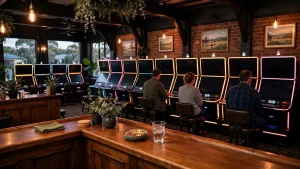
Guidance distinguishes venue opening times from gaming-area availability and addresses access, oversight and the legal limits of online pokies.
Adelaide venue opening times are a practical question, but there is no single city-wide schedule that can be applied to every place with pokies. A venue may set its own hours, and those hours can change. Without a confirmed, current listing for a particular venue, naming an opening time would be guesswork rather than useful guidance.
The phrase “open now” is also time-sensitive. An old directory entry, a search result cached from an earlier update, or a general description of a venue does not establish that it is open at the moment of checking. The relevant detail is the venue’s current operating information, ideally published by the venue itself. If that information is unclear, direct confirmation is more reliable than treating a general listing as a guarantee.
There is a second distinction: a venue being open does not necessarily answer whether its gaming area is available throughout the same period. Venue hours describe the broader premises; the availability of pokies is a separate operational detail. The two may coincide, but they should not be assumed to do so. A listing that says a venue is open therefore does not, by itself, confirm that its gaming facilities are operating at that time.
Requests for an early opening, including one around dawn or shortly afterwards, need to be checked against the individual venue’s schedule. A time that suits one venue cannot be transferred to another, and a general Adelaide label does not establish that any particular gaming floor is open then. The same applies to a planned visit on a public holiday or another date when a venue may publish different hours.
A useful check is precise: confirm the date, the venue’s opening time, and whether the pokies are available during the intended visit. If the information only gives the hours of a restaurant, bar, hotel or broader venue, it may not settle the question about gaming access. Where a venue publishes separate schedules for different areas, the gaming-area schedule is the relevant one.
This approach avoids a common mismatch. Someone can arrive while a venue is open yet find that the specific facility sought is not available. Conversely, relying on a third-party listing that has not been updated can create the opposite problem: an expected opening that does not match the venue’s current arrangements. Neither outcome can be resolved by assuming that all Adelaide venues follow one timetable.
“Open late” and “open 24 hours” describe different arrangements. A late closing time still has a closing time; round-the-clock operation would mean no daily closure. One does not prove the other. A venue described informally as a late-night option should not therefore be treated as continuously open, and an opening-hours result does not establish that pokies operate at every hour the premises are accessible.
The distinction matters particularly when planning a visit outside ordinary daytime periods. The venue’s current hours should be checked for the intended day, and any separate information about gaming access should be checked as well. If a listing does not state those details, it cannot support a confident assumption about late-night availability. A precise answer requires venue-specific confirmation, not a city-wide rule.
There is also a difference between an advertised schedule and a confirmed service at the time of arrival. Hours can be revised, and a listing can remain visible after it has become outdated. For a time-critical visit, checking close to departure reduces reliance on old information. This is not evidence that Adelaide venues commonly change their hours; it is simply the limitation of treating a published schedule as permanent.
Opening information answers when a venue or facility is available. It does not show a pokie’s payout percentage, nor does an early or late session indicate a better return. Those are separate questions. A timetable is operational information; it is not evidence about a game’s return setting or the outcome of an individual session.
A report on changes to venue responsibilities also describes a relevant operating condition: from 1 July, venues with more than 20 gaming machines are required to have a dedicated Responsible gambling officer (RGO) present while those machines are operating. That condition concerns staffing during machine operation; it does not provide a public opening timetable for Adelaide venues or confirm that a particular venue is open at a particular hour.
For a visit at a specific time, the dependable sequence is straightforward: identify the venue, confirm its current opening hours for that date, and verify that the pokies are available during those hours. Until those details are confirmed for the chosen venue, “open now” remains a question of current, venue-level information—not a dependable description of Adelaide as a whole.
Choosing pokies to play in Adelaide means weighing what is known about an online operator before signing up. This list offers a concise reference to the available licensing and payment details for each option.
7Bit Casino
7Bit Casino is operated by Dama N.V. and holds a Curacao license.
Wild Tokyo
Wild Tokyo lists a A$10 minimum deposit. Its stated payout times are 30–60 minutes for crypto and 1–5 days for fiat.
SkyCrown
SkyCrown is licensed by the Tobique Gaming Commission. Its stated payout times are around 10–15 minutes for crypto and 1–5 days for fiat, with a A$30 minimum deposit.
Neospin
Neospin holds Curacao Gaming Control Board license OGL/2023/176/0095, issued to Hollycorn N.V.
Uptown Pokies
Uptown Pokies has operated since 2017 and lists a A$20 minimum deposit. It holds a Curacao license.
WinSpirit Casino
WinSpirit Casino holds Curacao eGaming license OGL/2024/923/0383, issued to Antillephone N.V. Its listed minimum deposit is A$30.
DragonSlots Casino
DragonSlots Casino is licensed by the Curacao Gaming Authority, with Jumpman Gaming Ltd named in the licensing details.
Thor Casino
Thor Casino is licensed in Curacao through Antillephone N.V., with Versus Odds B.V. named in the details. Its listed minimum deposit is EUR 20.
Vegaz Casino
Vegaz Casino holds Curacao license OGL/2024/1335/0780 and lists a EUR 20 minimum deposit.
LuckyVibe
LuckyVibe holds Curacao Gaming Control Board license OGL/2023/176/0095, issued to Hollycorn N.V.
“Best paying” sounds like a ranking, but a game title alone is not enough to establish one. A return-to-player setting, or RTP, describes a configured return rate; it is not a promise about what a particular machine will return during a visit. A specialist review reports that some game providers let casinos choose between more than one RTP setting for the same pokie. If that applies, identical titles at different casinos may be configured with different return percentages.
That distinction matters when comparing Adelaide casino pokies. A name or screen design identifies the game, but not necessarily the setting selected for it at a particular venue. A comparison based only on a title, a promotional description or a figure found elsewhere can therefore miss the detail that would make the comparison meaningful. The relevant information would need to identify the specific configuration and the place where it applies. Without that, calling one game the best-paying option in Adelaide would claim more than the available comparison can show.
RTP is also a poor tool for forecasting a single session. It expresses a return setting, not a schedule of payments. It does not indicate when a win will occur, how large it will be, or whether the result of a particular play will be favourable. Even where a stated percentage is available, it cannot be translated into a guaranteed cash outcome for one person or one visit. The figure describes the setting, not an individual result.
Each spin is generated as a separate random event by the game’s Random Number Generator. The previous outcome does not make the next one more likely to win or more likely to lose. A run of losses is not evidence that a machine is due to pay, and a recent win does not establish that another is imminent. Reading a pattern into consecutive results may feel persuasive; it does not change the random process.
This also limits comparisons between games. A title that appears to have a higher return setting is not thereby certain to produce a larger short-term payout than another. Nor does a win on one machine show that it has a better setting than a neighbouring machine. Short sequences of results are outcomes, not reliable measurements of a game’s configured return. A ranking based on anecdotes, isolated jackpots or recent activity confuses chance with evidence.
For anyone assessing pokies in Adelaide, the practical distinction is between information about a setting and claims about results. A documented setting can support a narrow comparison if it clearly applies to the same game configuration at the venue being considered. A list of popular titles, a screenshot of a win or a statement that one machine is “hot” does not establish that comparison. If the setting is not identified, the title alone cannot settle which option has the higher theoretical return.
Return-to-player (RTP) describes a configured return rate and is not a promise of what a machine will return during a single visit.
The same care applies to comparisons involving Adelaide CBD venues or listings described as city-wide. A game’s availability in more than one place does not show that its configuration is identical everywhere. The casino-specific choice may matter, and the independent nature of each spin remains the same regardless of location. Neither a venue’s reputation nor a cluster of recent wins can substitute for information about the actual setting.
The sensible limit is therefore precise: RTP can describe a configured return rate, and a given title may not have the same setting at every casino. It cannot identify a guaranteed winner, predict the next spin or prove that a venue’s pokies pay better overall. Without comparable, venue-specific settings, “best paying” is a label rather than a demonstrated ranking.
A venue described as being near Adelaide Airport may be convenient for a stop before or after a flight, but “near” does not establish that it is inside the airport or reachable on foot. The same distinction applies to searches for pokies at the airport: a location phrase can indicate the surrounding area rather than a gaming venue within the terminal. The actual venue address is the first detail to confirm.
For an airport-area visit, the useful comparison is between the venue’s address and the relevant airport destination. Terminals, pick-up points and other airport facilities may not share the same access route. A map pin that appears close at a broad scale can still involve a separate road journey or a change in transport. The location should therefore be checked at street level, with the route set from the intended starting point rather than from a general airport label.
The practical question is not simply whether a venue is “near the airport”. It is whether the trip fits the available time, transport arrangements and baggage or connection plans. A visit that requires a detour may make little sense around a flight schedule; a venue on a workable route may be a different proposition. No distance or journey time should be assumed from the wording of a location listing alone.
For someone already in central Adelaide, proximity depends on the exact starting point and destination, not just the labels “CBD” or “North Adelaide”. Those areas cover more than one possible point of departure. A venue may be described as close to the centre while still requiring a separate journey from a particular hotel, workplace or meeting place.
A sound comparison uses the precise venue address and the intended origin. It also checks whether the route remains practical at the time of travel. A map estimate can change with traffic, access restrictions or transport availability; the broad area name cannot settle those details. “Near me” is similarly dependent on the location being used by the map service and may not reflect where the person will actually begin the trip.
Search wording that includes Adelaide and Victoria can also be ambiguous. It may refer to a place name, a broader location or an imprecise entry, rather than a clear Adelaide venue. The address should be matched to the intended destination before any travel plan is made.
Location listings are useful for narrowing an area, not for proving that a venue is the closest option or that it is inside a transport hub. Before travelling, confirm the venue’s full address, the route from the actual starting point and whether the map pin corresponds to the entrance. Where a trip involves a flight, allow for the separate journey between the airport and the venue rather than treating “near” as a travel-time estimate.
This approach avoids a common mismatch: the area is right, but the destination is not. A location label can help identify where to look; only the address and route establish whether the trip works.
For Adelaide pokies venues, responsible-gambling oversight has a practical measure: whether staff are assigned to respond when gambling-related concerns arise, and whether incidents are recorded. These arrangements do not establish which venue is best, but they provide a clearer basis for understanding how a venue is expected to handle signs of harm than a claim based on atmosphere or popularity.
A report by regionriverina.com.au says that, from 1 July, a venue operating more than 20 gaming machines must have a dedicated responsible gambling officer (RGO) on duty while those machines are operating. The condition links the officer’s presence to machine operation, rather than simply to the venue’s general opening hours. The officer is a designated role, not just a staff member who happens to be present.
That distinction matters when comparing pokies venues in Adelaide or elsewhere. A large number of machines does not, by itself, describe the support available on the floor. The stated requirement is tied to the threshold and operating period: above the specified machine count, an RGO must be on duty while the machines are running. It does not establish that every venue has the same staffing arrangements or that a venue below the threshold has no responsible-gambling procedures.
The same report describes a requirement for venues to maintain a gambling incident register. It is intended to capture details of occurrences, including situations where a patron’s behaviour indicates possible gambling harm or that harm is already affecting them. The register makes record-keeping part of oversight: an incident is not only a moment handled on the floor, but also an occurrence that must be documented.
A register is not a public scorecard. Its purpose is to record relevant incidents, not to rank venues or prove that a particular location is safer than another. Likewise, the presence of an RGO does not guarantee a particular outcome for every patron. These are operational safeguards, with defined roles and documentation requirements; they should not be mistaken for a promise that gambling carries no risk.
For people considering a venue in Adelaide’s CBD or another part of the city, these requirements describe what oversight is meant to involve where the conditions apply. They do not supply a venue-by-venue comparison, and the rules alone cannot identify the best pokies venue in Adelaide. A meaningful comparison would require reliable information about the individual venue’s arrangements, rather than an assumption based on its location, size or machine count.
The core distinction is between general service and formal oversight. An RGO has a specified duty during machine operation at venues above the stated threshold, while the incident register provides a record of behaviour that may signal gambling harm. Together, those measures create a process for recognising and documenting concerns; they do not make machine outcomes predictable or turn a venue into a risk-free setting.
A search for online pokies in Adelaide can blur two separate legal questions: whether a company may offer the games to people in Australia, and whether an individual player is committing an offence by using an offshore site. Under the Interactive Gambling Act 2001, the prohibition falls on operators that provide real-money online pokies to Australian residents without a domestic licence. No domestic licences for online casinos have been issued, so there is no Australian-licensed online casino.
That leaves no locally licensed route for real-money online casino play. The law’s focus on operators does not mean that every part of the situation is legally equivalent, however. The stated restriction is on companies offering the service; it does not make an individual player liable simply for playing. Australians may play on offshore sites that accept them.
This distinction is narrow. It does not turn an offshore operator into an Australian-licensed business, nor does it supply the protections that a local licence might otherwise imply. A site accepting Australian customers is not, by that fact alone, operating under an Australian online casino licence. The ability to access a service and the existence of domestic regulatory cover are different matters.
The practical consequence becomes clearest when a payment dispute arises. If an offshore casino refuses to pay winnings, Australian players have no legal recourse in Australia. A displayed balance or a stated withdrawal policy is not equivalent to an enforceable local route for resolving a refusal to pay. The operator’s willingness to accept a player does not change that position.
The distinction also applies to searches combining Adelaide with phrases such as “no deposit” or “real money”. An offer described in those terms remains an offer from an online operator; the wording does not create a domestic licence or alter the legal boundary. Nor does the Adelaide location of the person searching change the operator-side rule.
For anyone comparing online offers with the best pokies in Adelaide, the central calculation is therefore not simply whether a site appears available. On the domestic side, no Australian-licensed online casino exists. Offshore sites may accept Australians, and players are not the target of the Act’s operator prohibition, but an unpaid win carries no Australian legal recourse. Those conditions should be kept separate: access is possible, local licensing is absent, and recovery through Australian law is unavailable if an offshore casino refuses payment.
The Australian Communications and Media Authority (ACMA) enforces the Interactive Gambling Act 2001. Its role includes blocking access to illegal offshore gambling sites. Internet service providers must comply with ACMA’s blocklist, so an online service that once appeared accessible may later be blocked. A blocked page is an enforcement outcome, not evidence that the service was safe, fair or approved.
No Legal Recourse
If an offshore casino refuses to pay winnings, Australian players have no legal recourse in Australia as no domestic licenses for online casinos have been issued.
This matters when searches for online pokies around Adelaide produce results that appear local. A website’s wording, currency display or apparent availability in South Australia does not establish domestic oversight. Site blocking is one part of enforcement; it does not turn an offshore service into an Australian-regulated one, nor does the absence of a block establish that a service is lawful.
The legal age for gambling in Australia is 18. That threshold applies to pokies as well as other forms of gambling. Age eligibility, however, is separate from the status of an online service: being old enough to gamble does not make an offshore site subject to Australian protections.
BetStop is a national self-exclusion service, but its reach has a defined limit. It applies to Australian-licensed operators and does not bind offshore sites. Because there is no Australian-licensed online casino, BetStop should not be treated as a way to block access to offshore online casino services. An exclusion request cannot be assumed to follow a person across every website operating from outside Australia.
That distinction is relevant to searches for an Adelaide casino online or for pokies available near Adelaide. A result may be reachable at one point and blocked later; it may also sit outside the coverage of domestic exclusion arrangements. Neither circumstance supplies the protections associated with a locally supervised online casino.
ACMA’s blocklist gives internet service providers a concrete instruction: restrict access to listed illegal gambling sites. It is an enforcement mechanism, not a certification scheme. It does not rank services, assess their payout claims or verify that a game’s return setting is transparent. Those conclusions cannot be drawn from whether a page loads.
The same caution applies to claims about high-limit or maximum-bet pokies presented as available to South Australian players. A site’s description of its games or limits says nothing by itself about Australian oversight, and a search result is not proof of regulatory approval. Site access and regulatory status are separate questions.
For protections to have practical value, their coverage must match the service involved. The age rule applies to gambling in Australia; ACMA enforcement and provider compliance apply to blocked sites; BetStop’s exclusion effect does not extend to offshore operators. Treating those measures as interchangeable would overstate what each one does.
A venue being open late and its pokies operating late are separate matters. Opening hours describe when a venue is accessible; they do not, by themselves, confirm that gaming machines are available throughout that period. A late-night listing is therefore not enough to establish that pokies will be operating at a particular time.
The distinction matters when assessing whether Adelaide has a venue open around the clock. “Open now” is time-specific: the answer depends on the venue’s hours at the time in question, not on a general description of its usual schedule. Even a venue that trades late would not automatically qualify as a 24-hour pokies venue unless its own information confirms both continuous venue access and machine operation.
For a particular late-night visit, the useful detail is the operating schedule for the gaming area, not merely the venue’s overall opening hours. Where published information covers only the venue as a whole, it leaves the machine schedule unresolved. Direct confirmation from the venue is the clearest way to distinguish the two, especially when the intended arrival time is close to the stated closing time.
Attention A venue's general opening hours do not automatically confirm that its gaming machines are operational throughout the same period.
The same distinction applies to listings labelled “open now”. A listing may indicate that a venue is open without specifying whether its pokies are operating at that moment. It may also describe general trading hours rather than the status of a particular area. The label is not a substitute for venue-specific information about machine operations.
For searches about Adelaide pokies hours or opening times, the relevant question is therefore precise: are the machines operating at the intended hour? A published closing time can help establish when the venue closes, but it does not necessarily answer that narrower question. If the schedule does not explicitly cover the gaming area, the machine hours should not be inferred from the venue’s general timetable.
There is no sound basis for treating “24-hour pokies” as a citywide description. It is a claim about an individual venue and its machine operations, and it requires confirmation at that level. Without venue-specific hours confirming continuous operation, the most accurate description is that late-night availability remains unconfirmed—not that pokies are open all night.
A useful check records two separate details: when the venue is open and when its pokies are operating. Keeping those details distinct prevents an ordinary opening-hours notice from being mistaken for confirmation of late-night machine access.
A reference to Crown alongside Adelaide pokies does not, by itself, establish that a particular Crown venue operates in Adelaide. Nor does it confirm which machines, if any, are available at a named location. A venue name, a game list and a payout claim are separate propositions; one should not be treated as proof of the others.
The same distinction applies to descriptions of a “best pokies room”. That label has no measurable meaning unless the comparison states what is being assessed and provides comparable information for the venues involved. A room’s appearance or range of machines cannot establish that it offers better returns. Without venue-specific evidence, a ranking would be presentation rather than analysis.
A claimed maximum cash payout is not a single measure that can safely be inferred from a machine’s name or a promotional description. The relevant terms would need to identify the particular machine and explain what the stated maximum covers, including whether it refers to a prize shown in the game, a payment limit, or a venue’s cash-handling arrangement. Those are different things.
A headline amount also would not establish that a particular patron will receive that amount. A maximum describes a ceiling under stated conditions, not an expected result. The wording of the machine’s rules and the venue’s applicable payment terms would need to be checked together before the claim could be interpreted. If either is unclear, the maximum remains unclear too.
No Adelaide-specific Crown machine list, room comparison or maximum cash-payout figure can be established from the name alone. That is not a reason to substitute a guess. It is a reason to keep the claim narrow: confirm the venue, the machine and the exact terms before treating a figure as applicable.
A claimed maximum cash payout is not a single measure. It may refer to a prize shown in the game, a payment limit, or a venue's specific cash-handling arrangement. These terms must be checked against the machine's rules and venue policies.
For any comparison, useful evidence would include a current venue identification, a machine-specific rule display and the terms governing payment of a prize. A general statement that a casino has pokies does not verify those details. Nor does a result attached to “Crown” prove that the information applies to an Adelaide location.
The practical distinction is simple: brand association is not venue confirmation, and a stated maximum is not proof of a particular payout. Claims about Crown and Adelaide pokies should be read at exactly the level their supporting details allow—no further.
CBD-focused searches are about finding a venue within the city centre, not establishing which Adelaide location has the largest selection or the best outcome. A venue’s address alone cannot support either claim. Without reliable venue-level information, a directory or ranking would imply comparisons that have not been made.
The phrase “best pokies” also needs a clear measure. A central location may suit someone prioritising a short trip, while another person may value different venue features. Those preferences do not establish that one venue’s pokies are better. A useful comparison starts with the specific requirement—such as location or accessibility—then checks current details directly with the venue. No venue name or machine count should be inferred from a broad CBD search.
Club-related searches can create a similar ambiguity. “Club” describes a type of venue in ordinary usage, but it does not by itself confirm that a particular Adelaide CBD club has pokies, how many it has, or what machines are available. Those details need to be checked at venue level rather than assumed from the label.
Self-exclusion is a separate consideration from location. It is one of the responsible-gambling tools used to restrict access to gambling, alongside deposit, loss and session-time limits. Its practical effect depends on the arrangements that apply to the relevant venue or operator; a CBD address is not evidence of a particular enrolment process or coverage. Anyone considering self-exclusion should confirm the terms and scope with the relevant venue or service.
A sound CBD comparison therefore separates three questions: whether a venue is actually in the area, whether it offers the facilities being sought, and whether its responsible-gambling arrangements fit the person’s needs. Each requires venue-specific confirmation. Search labels and broad location descriptions do not answer those questions, and they are not a substitute for current venue information.
A reference to Newcastle alongside Adelaide does not identify an Adelaide venue or establish that any local pokies accept cashless play. The terms can point to different places or to different meanings of “cashless”: a venue-based way to use machines without notes or coins, or a payment method used for an online transaction. Those are separate arrangements, and one does not verify the other.
PayID is not a gaming product. It is an alias service connected to Australia’s New Payments Platform (NPP), allowing a bank transfer to be addressed using an email address, mobile number or ABN rather than account details. Whether a particular payment can be made depends on the banks and the recipient involved; the presence of PayID as a payment option says nothing about a venue’s machine setup.
A specialist review reports that some Australian banks, including the Big Four, sometimes block PayID transfers to merchants they identify as gambling-related. That is a reported payment caveat, not a guarantee that a transfer will succeed or fail. Bank policies and merchant classifications can affect the outcome.
Payment branding is not evidence of regulatory status, game fairness or a particular return setting. A PayID symbol cannot establish that a service is authorised, and it cannot confirm that an Adelaide venue offers cashless pokies. For a physical location, the relevant detail is the venue’s own description of its machines and payment arrangements. For any transfer, the bank’s terms govern how the payment is handled. Keeping those questions separate avoids treating a payment option as proof of something it does not establish.
Australian players can legally play on offshore sites that accept them, but no Australian-licensed online casino exists. The law targets operators offering real-money online pokies without a domestic licence, and players have no Australian legal recourse if an offshore casino withholds winnings.
You must be at least 18 years old to gamble online in Australia.
Yes. PayID is treated like any other qualifying deposit method at the recommended sites, so eligible PayID deposits qualify under the site's bonus terms.
It is the amount you must wager before bonus winnings can be withdrawn. For example, a $500 bonus with a 40x requirement means you must bet $20,000; if the requirement applies to a $500 deposit plus a $500 bonus at 35x, you must bet $35,000.