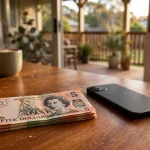
Australia has no licensed online casinos; the law targets operators, while offshore access leaves approval and dispute protections unresolved.

Australia’s position on live casino access is not a matter of choosing between local and foreign licences. There is no Australian-licensed online casino, and the Interactive Gambling Act 2001 prohibits operators from providing real-money online casino games to people in Australia. The restriction covers live table play as well as other casino-style games.
The law is directed at the operator, not the individual player. A person in Australia does not incur a fine or criminal prosecution simply for playing on an offshore site that accepts Australian customers. That distinction does not make the service lawful for the operator, nor does it create an Australian regulator responsible for resolving a dispute with that site.
The Australian Communications and Media Authority (ACMA) enforces the Act and blocks access to illegal offshore gambling sites. Internet service providers must comply with its blocklist, so access can be restricted even where an offshore service continues to accept customers. A site’s availability at a particular time is not evidence of Australian approval.
Choosing a live casino online in Australia means weighing the details that are actually available, including licensing and practical payment information. Use these short verdicts as a starting point when deciding which operators to explore further.
7Bit Casino
7Bit Casino is operated by Dama N.V. and is licensed in Curacao.
Wild Tokyo
Wild Tokyo is licensed in Curacao and has a A$10 minimum deposit. Its stated payout times are 30–60 minutes for crypto and 1–5 days for fiat.
SkyCrown
SkyCrown is licensed by the Tobique Gaming Commission and has a A$30 minimum deposit. Its stated payout times are around 10–15 minutes for crypto and 1–5 days for fiat.
Neospin
Neospin is licensed by the Curacao Gaming Control Board under OGL/2023/176/0095, with Hollycorn N.V. identified as the operator.
Uptown Pokies
Uptown Pokies has operated since 2017 and is licensed in Curacao. Its minimum deposit is A$20.
WinSpirit Casino
WinSpirit Casino is licensed by Curacao eGaming under OGL/2024/923/0383, with Antillephone N.V. identified as the licensee. The stated minimum deposit is A$30.
DragonSlots Casino
DragonSlots Casino is licensed by the Curacao Gaming Authority, with Jumpman Gaming Ltd identified in connection with its license.
Thor Casino
Thor Casino is licensed in Curacao through Antillephone N.V., with Versus Odds B.V. identified as the operator. Its minimum deposit is EUR 20.
Vegaz Casino
Vegaz Casino is licensed in Curacao under OGL/2024/1335/0780. Its minimum deposit is EUR 20.
LuckyVibe
LuckyVibe is licensed by the Curacao Gaming Control Board under OGL/2023/176/0095, with Hollycorn N.V. identified as the operator.
BetStop has a narrower reach than its name may suggest. It applies to Australian-licensed operators and does not bind offshore casino sites. Because Australia has no licensed online casino, BetStop cannot be treated as a control that prevents access to offshore live casino services. It is a self-exclusion scheme, not a substitute for legal oversight of those sites.
This is the relevant distinction for anyone comparing live casino options from Australia with services described for the UK: the market’s rules depend on where the customer is located, not on the wording used to describe a site. A foreign licence does not become an Australian licence, and the absence of player liability does not remove the operator prohibition. No local online-casino licence exists to verify.
An offshore live casino transaction has two separate stages: money going in and any balance coming back out. A successful deposit settles only the first. It does not establish that a withdrawal will be approved, that a payment route will remain available, or that an Australian institution can resolve a dispute with the operator.
Access itself is not assured. The Australian Communications and Media Authority can have internet service providers block access to illegal offshore gambling sites, so a site that opens at one point may later be inaccessible from Australia. A disrupted connection does not settle a pending balance or explain how it can be recovered. The practical exposure is therefore present before a game is played: access to the account and its funds depends on an offshore service that Australian authorities may seek to block.
PayID is not a separate bank account or a guarantee that a gambling payment will be accepted. It is an alias layer on the New Payments Platform (NPP), allowing a transfer to be addressed using an email address, mobile number or ABN. The NPP is supported by all major Australian banks and uses end-to-end encryption. Those features describe the payment infrastructure; they do not certify a casino, establish the fairness of its games or secure a withdrawal.
Using PayID for real-money casino play requires linking it to a bank account first. That creates a distinct point of failure: the bank may not process a transfer to a known gambling merchant. A specialist review reports that some Australian banks, including members of the Big Four, have at times blocked PayID transfers associated with such merchants. The same type of review reports broader bank and card-company restrictions on transactions to known gambling sites. These reports describe potential payment friction, not a uniform rule for every account or transaction.
A deposit that is declined is different from one that is debited but not credited to an offshore account. In either case, the payment route alone cannot determine who must correct the problem or how quickly it will be resolved. PayID’s role in the NPP does not extend Australian casino protections to the recipient. Nor does a payment reference, receipt or successful transfer answer whether the operator will later release funds.
Legal Risk
Under the Interactive Gambling Act 2001, operators are prohibited from providing real-money online casino games to people in Australia, and the ACMA may block access to illegal offshore sites.
Withdrawal requests can introduce a separate condition: identity checks. A specialist review reports that casinos may require verification before a first withdrawal, with documents such as identity and address evidence and, in some cases, a photograph of the account holder holding identification. These checks are not a substitute for a reliable withdrawal route. They are a requirement that may have to be completed before the operator processes a payout.
The documents should be verified before the first withdrawal is requested: identity evidence and proof of address are central to the check. If the details on an account and its documents do not match, or if requested evidence is incomplete, the withdrawal may remain unresolved while the operator reviews the account. Depositing first and assembling documentation only after a win reverses the order of the transaction’s practical risks.
The operator controls the account review and the release of funds. An Australian bank can process a payment instruction, but it cannot compel an offshore casino to approve a withdrawal. If an offshore casino refuses to pay winnings, Australian players have no legal recourse in Australia to recover them. That is the material difference between a payment dispute with a domestic institution and a dispute over an offshore casino balance.
BetStop applies to Australian-licensed operators; it does not bind offshore sites. It therefore cannot be treated as a restriction that will block access to, or account activity with, an offshore casino. Its scope does not resolve payment problems or provide a route to recover withheld winnings.
The same boundary applies to the broader transaction. A bank transfer may use Australian infrastructure, while the gambling service receiving it remains offshore. Secure transmission concerns the movement of payment data, not the operator’s obligation to return funds. A completed deposit, an account balance displayed on screen and an approved withdrawal are three different states. Only the last represents money released by the operator, and even then the receiving payment route must function.
For anyone assessing an offshore live casino transaction, the relevant accounting question is not simply whether a deposit method is listed. It is whether the full chain can be completed: access to the account, acceptance of funds, completion of identity checks and release of winnings. Australian payment rails can facilitate the first transfer; they do not close the gap left by an offshore operator’s refusal to pay.
Software is one part of an online gambling service, not proof that a particular live casino product is available to people in Australia. A supplier may develop or distribute gambling software, while a separate operator controls access to its site. Those roles do not establish that a specific supplier’s live tables are offered to Australian residents, or that a site using its software is lawful here.
The legal position sets a boundary on any comparison. Under the Interactive Gambling Act 2001, operators cannot provide real-money online casino games to people physically in Australia. That includes casino-style table games and poker. The law addresses the service provider; it does not make a software label evidence of permission to offer the service in this country. Accordingly, naming a platform as the “best” software, or treating a technical feature as a recommendation, would imply a comparison that cannot be substantiated.
A software-provider claim needs more than a logo or a product name. It would need to identify the relevant product and establish what it does, where it is used, and whether the claim applies to the live-casino component rather than another type of game. Those distinctions matter: a company associated with gambling software is not thereby confirmed as the supplier of a particular live table, and a provider’s general presence in the industry does not prove that a given Australian-facing site uses its software.
The same test applies to descriptions such as “high quality”, “secure”, “realistic” or “low latency”. Without evidence tied to a specific product and deployment, these are marketing descriptions, not measurable attributes. A site’s use of the word “live” also cannot establish how its games are produced or streamed, what controls operate behind the interface, or whether a claimed feature is consistently available. No reliable comparison follows from a list of software names alone.
Software claims should also be kept separate from claims about fairness or returns. A provider name does not establish the return settings of a particular game, and a payment option does not demonstrate software integrity. PayID is a transfer method built on Australia’s New Payments Platform; its presence says nothing by itself about a site’s licensing, fairness or disclosure of return information. Treating a payment logo as a software check would confuse unrelated parts of the transaction.
The same restraint applies to free access. A “free” label could refer to a demonstration mode, a promotional offer, or something else; without product-specific terms, it does not establish what is available, whether registration is required, or whether play can lead to real-money gambling. A free-play label is not evidence that a real-money service is lawful for Australian users. Nor does it make a software product suitable for a recommendation.
A proposed live casino solution may be described as a package for operators, but that phrase alone establishes neither its contents nor its capabilities. It does not confirm which games are included, how a platform connects to an operator’s systems, what testing has been completed, or whether the software is offered in a particular market. Those are separate claims requiring product-level evidence. A polished demonstration or a supplier’s general portfolio cannot fill those gaps.
References to Singapore do not change the Australian analysis. A market-specific statement would require evidence about the relevant jurisdiction and the particular service; a country name appearing beside a software claim does not establish availability, approval or suitability there. It should not be treated as a proxy for Australian status.
The defensible conclusion is narrow: software suppliers form a distinct part of the gambling industry, but a general provider label cannot verify a live-casino product’s features, availability or standing in Australia. Without product-specific substantiation, there is no sound basis for ranking software or recommending a site on that basis. The distinction is practical, not semantic: the supplier, the operator, the product and the legal status of the service are separate questions.
A live casino provider can refer to different parts of a service: the company supplying a game, the platform connecting games to an operator, or a technical vendor handling an integration. Those roles are not interchangeable. A provider name attached to a website does not, by itself, establish who supplies a particular poker table, which platform runs it, or whether the named company has any direct relationship with the operator.
The same distinction applies to API claims. An API is a technical interface, not a consumer-facing guarantee. A statement that a platform supports integrations does not establish which games are connected, whether the connection is operational, or what a player can access. Nor does an integration claim establish the terms governing a game. Those are separate questions, and a product description should identify the relevant operator and product rather than relying on a broad technology label.
Poker requires particular care because the word covers products that may differ in format and rules. A page describing “live casino poker” does not establish which version is offered, how a hand proceeds, what limits apply, or whether the activity is available to someone in Australia. Such details need to be tied to the specific product and its published rules; a general provider label cannot fill the gap.
Reviews have a similar evidential limit. A review may describe an account, platform or product at a particular point in time, but its conclusions should not be treated as proof that every listed feature remains available. A useful review identifies what it assessed and separates direct observations from claims about a provider or technical setup. Without that distinction, a polished platform description can look more conclusive than it is.
Australian law sets a separate boundary around availability. Under the Interactive Gambling Act 2001, providing online casino-style games, including poker, to people physically in Australia is prohibited. There is no Australian-licensed online casino. The law places liability on operators rather than individual players, but that does not turn an offshore poker service into a locally licensed product. The Australian Communications and Media Authority enforces the Act and blocks access to illegal offshore gambling sites; internet service providers must comply with its blocklist.
BetStop is not a safeguard against every offshore service. It applies to Australian-licensed operators and does not bind offshore sites. Its limits matter when assessing claims about account controls: a site’s own statements about exclusion or access restrictions should not be confused with participation in BetStop.
For poker, the practical standard is therefore specific identification, not a provider name used as shorthand. A named company, a platform claim, or an API reference does not establish the exact game, its rules, its availability in Australia, or the legal status of the service offering it. These are distinct points, and none follows automatically from the others.
“Live” describes a style of presentation, not a complete account of what a game offers. A catalogue heading can group products under broad labels, but that label alone does not establish the rules, features, stakes or conditions attached to any particular title. Those details matter more than the category name when assessing what a game actually involves.
A list built from familiar-sounding names would create the appearance of a verified selection without establishing that those games are available or that their stated characteristics are accurate.
The same restraint applies to game shows presented in a live-casino setting. The label does not establish how a format works, what decisions a participant can make, or how its outcomes are determined.
“Free play” also needs a precise meaning. It may refer to a demonstration mode, a promotional arrangement or something else; the phrase alone does not explain whether real money is involved or what conditions apply. A free-play label therefore cannot establish the terms of access, whether results carry any value, or whether a version matches a real-money game. Those points require product-specific information rather than an assumption based on the wording.
Likewise, calling something a live-casino slot does not establish how it differs from another kind of casino game, or whether the label accurately describes the product. A catalogue description should not be treated as evidence of those characteristics.
For Australian residents, there is a further boundary: the Interactive Gambling Act 2001 prohibits operators from providing real-money online casino games to people physically located in Australia. The prohibition covers casino-style games rather than depending on whether a product is marketed as a table game, a show or a slot. Describing a category does not alter that legal position.
A sound description of any individual game would need to identify the product and support its claims with the relevant rules and terms. Without that, broad labels are not a basis for ranking games or recommending one over another. The distinction is simple: a category name says how something is presented; it does not prove what the game contains or how it operates.
A live roulette table combines a familiar game format with a real-time presentation, but that description alone is not enough to establish what an Australian player can actually access. A site’s use of “live roulette” in its navigation or promotional language does not confirm that a table is available to Australian residents, how it operates, or what conditions apply.
There is also a separate legal issue. Under the Interactive Gambling Act 2001, providing online casino-style games such as roulette to people physically located in Australia is prohibited. The law is directed at operators rather than individual players, but that distinction does not make an offshore service locally licensed or give a player Australian legal recourse if a dispute arises. ACMA can block access to illegal offshore gambling sites, and internet service providers must comply with its blocklist. Access can therefore be interrupted independently of a site’s own claims about its service.
A comparison of live roulette sites would need dependable details about availability, table rules, limits, and the terms attached to play. Those details cannot be inferred from a roulette label or a live-video presentation. Nor does a payment option establish that a site is licensed, that its games are fair, or that its return information is transparent. A polished table is presentation; it is not a regulatory status.
The same separation matters when a site promotes a bonus alongside roulette. An offer is a set of conditions, not an addition to the value of a game by default. Its wagering basis, eligible games, expiry conditions and any withdrawal restrictions determine the actual cost of accepting it. A bonus advertised beside a roulette table does not establish that roulette play contributes to turnover, or at what rate. Those terms need to be read independently; the arithmetic belongs to the offer, not to the table.
BetStop is another boundary worth keeping clear: it applies to Australian-licensed operators and does not bind offshore sites. Since Australia has no licensed online casino, it should not be treated as a control that reaches every offshore gambling account.
Accordingly, “best” cannot be reduced to the appearance of a roulette table, a bonus banner or a payment badge. Without substantiated information about the service and its conditions, ranking sites would turn presentation into evidence. For Australian residents, the central distinction remains between a site that can be reached and a service that is legally authorised to provide online roulette in Australia. The former does not establish the latter.
The phrase “live dealer” describes a type of casino presentation, but the label alone does not establish who operates a table, how a dealer interacts with players or what happens behind the video feed. It is not evidence of staffing arrangements, identity checks, game procedures or the availability of a particular table. Those details cannot be inferred from the wording of a site’s menu or a promotional description.
The same limit applies to named formats. A page may refer to live-dealer blackjack or dragon tiger, but those labels do not establish that either game is available to Australians, or explain its rules, table conditions or operation. Such claims require specific, current terms from the service itself. Without them, a comparison based on dealer quality, interaction or table choice would be guesswork presented as measurement.
There is also a separate Australian market constraint. Under the Interactive Gambling Act 2001, operators cannot provide real-money online casino games to people physically in Australia. Casino-style table games fall within that prohibition. ACMA enforces the law and blocks access to illegal offshore gambling sites, with internet service providers required to comply with its blocklist. A site’s use of live video or a dealer does not change the legal status of the service.
BetStop is not a safeguard against offshore casino access: it applies to Australian-licensed operators and does not bind offshore sites. There is no Australian-licensed online casino, so a BetStop registration should not be treated as a control that prevents access to those offshore services.
A “live” label also says nothing about the fairness or transparency of play. It does not establish how outcomes are recorded, what oversight applies, or whether a particular operator will honour a withdrawal. Nor does it verify that a dealer is present in the way a customer might expect. These are distinct questions, and a visual feed cannot answer them by itself.
For a real-money service, the practical distinction is not between a live table and an automated one. It is between claims that can be checked in current terms and claims that remain unsupported. Dealer presence, interaction, table format and availability should not be treated as established merely because a site uses those words. In Australia, that uncertainty sits alongside a clear legal boundary: the provision of online casino games to people in the country is prohibited for operators.
A live casino bonus is not its face value. The relevant figure is the total qualifying stake required before bonus-related winnings can be withdrawn. The calculation depends on what the wagering multiplier applies to: the bonus alone, or the deposit and bonus combined. Those are different conditions, even when the advertised bonus is identical.
A specialist review uses a $500 bonus with a 40x wagering requirement to illustrate the first method: $500 × 40 = $20,000 in required bets. That is turnover, not a fee and not a guaranteed loss; it is the amount that must be staked to meet the condition. The same review treats a requirement of 35x or less as a preferable benchmark and anything above 40x as punishing. Those are the review’s assessment thresholds, not a universal rule or a promise about any Australian offer.
The base used in the multiplier can change the calculation materially. If the condition applies to a $500 deposit plus a $500 bonus, the amount subject to wagering is $1,000. At 35x, that means $35,000 in bets. Comparing “35x” with “40x” alone therefore misses the central question: what balance is being multiplied?
The terms also need to identify which bets count toward turnover. A displayed multiplier does not, by itself, establish that every live table wager qualifies. Without a clear rule on eligible games and contribution rates, the headline number is not enough to calculate the actual requirement. A bonus can also carry a separate maximum cash-out condition; free-spin winnings may be capped, so completing turnover does not necessarily make the full balance withdrawable.
US-labelled live casino bonus material does not establish that an offer is available to Australians or lawful to provide here. Real-money online casino services, including live table games, are prohibited for operators serving people in Australia. The calculation is useful for understanding terms, not as an endorsement or a route to an offer.
The useful comparison is between the amount eligible for the multiplier, the resulting total turnover, qualifying-game rules and any cash-out cap. If any of those conditions is unclear, the advertised bonus value cannot be treated as its withdrawable value.
Bonus Turnover Calculation
Identify the Base
Determine if the wagering requirement applies to the bonus alone (e.g., $500) or the deposit and bonus combined (e.g., $1,000).
Apply the Multiplier
Multiply the base amount by the wagering requirement (e.g., $500 × 40 = $20,000).
Determine the Total Turnover
The resulting figure is the total amount that must be staked before bonus-related winnings can be withdrawn.
For Australian residents, eligibility begins with age: the legal minimum for gambling, including online pokies, is 18. Meeting that threshold does not make an online casino service lawful to provide in Australia. The Interactive Gambling Act 2001 prohibits operators from offering real-money online casino games to people in the country. The legal restriction is directed at providers, not a minimum-age exception that makes the service locally licensed.
Responsible-gambling controls address a different issue: how much time and money is exposed. Deposit limits can restrict funds added to an account; loss limits can cap losses over a chosen period; session time limits can interrupt continued play. Self-exclusion is a stronger access control. These tools can reduce exposure, but they do not establish that an offshore service is licensed in Australia or that it will apply a limit in a way that can be enforced locally.
BetStop has a narrow scope. It applies to Australian-licensed operators and does not bind offshore sites. Since no Australian online casino licences have been issued, registration with BetStop cannot be treated as a universal block on offshore casino access. A control that does not cover a service cannot be counted as protection against that service.
Country labels also need careful reading. References to live casino services in Malaysia, Canada or India do not establish that a site may lawfully serve residents there, or that its controls operate under Australian rules. Eligibility is governed by the laws relevant to the person’s location and the service being offered; a page’s country wording is not proof of either.
Account access and withdrawal eligibility are separate checks. Before a first withdrawal, identity and address documents need to be verified. That process does not guarantee payment, and it does not change the legal status of the operator. The practical calculation is therefore distinct: age determines whether a person meets Australia’s minimum gambling age; limits determine how much exposure is permitted within an account; neither substitutes for legal protection or makes offshore controls enforceable in Australia.
An app label does not establish that a service is available to Australian users, or that its mobile version works on a particular device. App availability, download routes, browser access and device compatibility need to be confirmed for the specific service; none should be inferred from a promotional page or a search result.
A download button is not evidence of a verified app. Before installing any software, check who publishes it, where the download comes from, what permissions it requests and whether the listing matches the service’s own documentation. A file offered directly from a website should not be treated as equivalent to an app-store listing. Avoid installing software when its publisher or purpose is unclear.
Browser access is a separate question. A page opening on a phone does not confirm that every feature works on that device, or that it will continue to work after an update. Screen size, operating system and browser version can affect performance, but no compatibility claim can be made without service-specific testing and documentation. Claims of seamless mobile play are marketing, not a substitute for those details.
An API is a technical connection through which software can exchange information or functions. Its existence alone does not establish that a consumer app is available, that a service is accessible in Australia, or that its mobile features have been tested. API claims and app claims answer different questions.
Likewise, “top” is not a measurable mobile attribute. A ranking does not establish app availability, download safety or device support.
Australia has no licensed online casino, and the Interactive Gambling Act 2001 prohibits operators from providing real-money online casino games to people in Australia. ACMA also blocks access to illegal offshore gambling sites. Mobile access does not change that legal position. BetStop applies to Australian-licensed operators only; it does not bind offshore sites. An app, browser page or API connection is not evidence of a local licence, fairness or regulatory protection.
There is no strategy that can predict or control the outcome: each spin is an independent random event. Some games may also have different return settings at different casinos.
It is the amount you must bet before bonus winnings can be withdrawn, calculated using a turnover multiplier. For example, a $500 bonus with a 40x requirement means $20,000 in bets; if the requirement applies to a $500 deposit plus a $500 bonus at 35x, it means $35,000.
There is no Australian-licensed online casino, and a foreign licence does not provide Australian oversight. ACMA blocks access to illegal offshore gambling sites, and Australian players have no legal recourse in Australia if an offshore casino refuses to pay winnings.
You must be at least 18 years old to gamble online in Australia.
The law prohibits companies from offering real-money online pokies to Australians without a domestic licence, and no such licences have been issued. The law targets operators, not individual players, so Australians are not prohibited from playing on offshore sites that accept them.
Compare the bonus with the total turnover required before you can withdraw winnings. For example, a $500 bonus at 40x requires $20,000 in bets, while a 35x requirement on a $500 deposit plus a $500 bonus requires $35,000; free-spin winnings may also be capped.