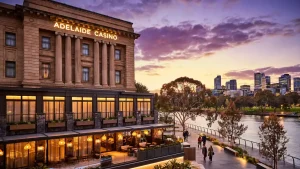
A practical look at accommodation bookings, venue details and the facilities that need confirmation when planning a casino visit in Tasmania.
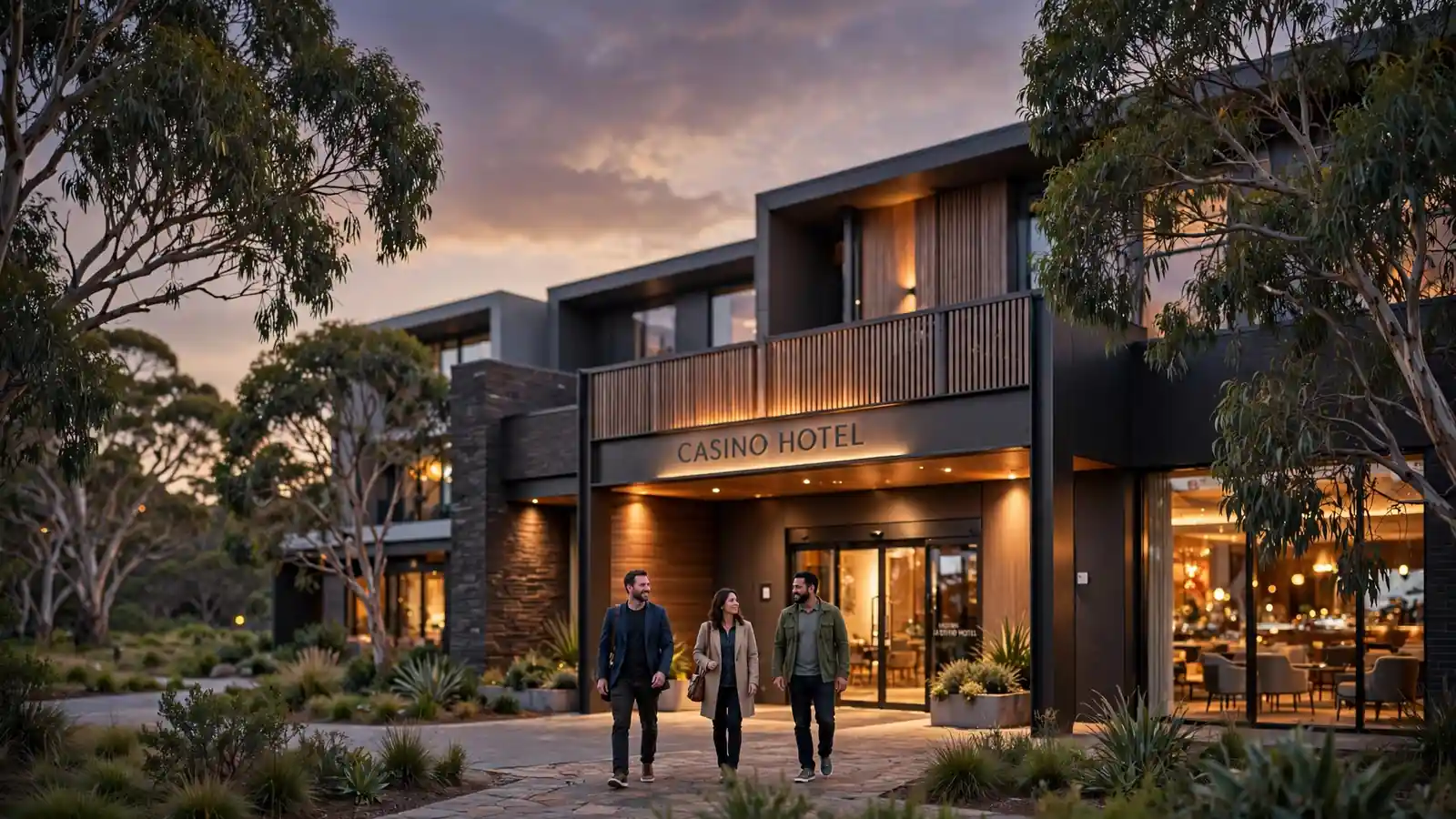
A casino hotel can be part of a Tasmania visit, but the room and the gaming venue are separate parts of the decision. A booking establishes accommodation only on the terms stated by the property. It does not, by itself, establish casino access, opening times, or the availability of any particular facility.
That distinction matters when comparing casino hotels in Tasmania. A room rate is only one line in the trip calculation. The relevant total also depends on the stay dates, the booking conditions, transport, and any other planned spending. Without confirmed prices and terms for a particular property and date, a claim that a deal is good value has no useful basis. The label “hotel deal” is packaging until the final amount and conditions are clear.
Room searches should therefore be read as accommodation research, not as evidence of what a hotel provides. Before treating a room as suitable, the specific booking should confirm the property, dates, room type, price, cancellation conditions and any charges that affect the final bill. A room description that does not state a feature cannot be treated as confirmation that the feature is included. Comparisons are meaningful only when the same dates and comparable conditions are used.
Choosing an online casino for Tasmania in 2026 calls for a careful look at the details available for each operator. This list provides a concise reference to their stated licensing and, where supplied, payment or minimum-deposit information.
7Bit Casino
7Bit Casino is licensed in Curaçao and operated by Dama N.V.
Wild Tokyo
Wild Tokyo lists a minimum deposit of A$10. Its stated payout times are 30–60 minutes for crypto and 1–5 days for fiat.
SkyCrown
SkyCrown is licensed by the Tobique Gaming Commission. Its stated payout times are around 10–15 minutes for crypto and 1–5 days for fiat, with a minimum deposit of A$30.
Neospin
Neospin holds Curaçao Gaming Control Board licence OGL/2023/176/0095, under Hollycorn N.V.
Uptown Pokies
Uptown Pokies has operated since 2017 and lists a minimum deposit of A$20. It is licensed in Curaçao.
WinSpirit Casino
WinSpirit Casino holds Curaçao eGaming licence OGL/2024/923/0383, issued to Antillephone N.V. Its stated minimum deposit is A$30.
DragonSlots Casino
DragonSlots Casino is licensed by the Curaçao Gaming Authority, with Jumpman Gaming Ltd listed as the operator.
Thor Casino
Thor Casino is licensed in Curaçao through Antillephone N.V., with Versus Odds B.V. listed as the operator. Its stated minimum deposit is EUR 20.
Vegaz Casino
Vegaz Casino holds Curaçao licence OGL/2024/1335/0780 and lists a minimum deposit of EUR 20.
LuckyVibe
LuckyVibe holds Curaçao Gaming Control Board licence OGL/2023/176/0095, under Hollycorn N.V.
The location also changes the calculation. A hotel associated with a casino and a hotel near a casino are not necessarily the same proposition. “Near” describes a relationship that still needs practical checking: the actual route, travel time and transport arrangements can affect both convenience and cost. A booking should not be assumed to include transport or to place the guest within an easy walk of the venue.
The casino visit itself needs its own plan. Accommodation can make a late finish or an overnight trip easier to organise, but it does not establish that the casino is open at the intended time. Casino hours and hotel arrangements answer different questions. Opening information needs to be confirmed separately for the relevant date, especially where the visit is being built around a particular schedule. A room reservation should not be treated as proof of access to the gaming venue.
A practical comparison can be kept to a small set of confirmed figures and conditions: the total room cost for the chosen dates, what the rate includes, the cancellation terms, and the expected cost of getting between the accommodation and the venue. If any of those points is unclear, the comparison is incomplete. A lower headline rate may not remain lower once conditions and travel are included; a higher rate is not automatically better value either.
 Best Casino in Victoria? What Can Be ConfirmedSee what the available information establishes about casino-linked accommodation and booking terms, and which searches for dining, parking and amenities remain
 Melbourne Casino Guide: Hotels, Dining and Venue DetailsCompare casino-complex rooms, linked hotels and separate stay packages, and check booking terms, venue details, dining and other common searches.
The same discipline applies to searches for a hotel in Tasmania connected with a casino. The wording may refer to a hotel on the same site, accommodation associated with a venue, or independent lodging nearby. Those are different arrangements, and they should not be collapsed into a single assumption. Property names, room availability and inclusions need to be checked against the booking being considered, rather than inferred from a general description.
For a short casino visit, an overnight stay is best treated as a separate travel expense that may support the itinerary, not as a bonus attached to gambling. The room decision can be assessed on its own terms, while casino access and hours are confirmed independently. That keeps the calculation grounded: a confirmed stay, a confirmed route and a confirmed visit schedule, with no assumed amenities or implied deal.
Poker searches can refer to different things: a dedicated poker room, a scheduled tournament, or poker played among other casino games. Those are separate offerings, not interchangeable labels. A tournament is an organised competition with defined entry conditions and rules; a poker room describes a place set aside for the game. Neither phrase, by itself, confirms that a particular format is available at a Tasmania casino.
The practical distinction matters because a tournament requires more than a table. Its format, registration arrangements, start time, entry cost and rules determine whether it fits a visit. Cash games, if offered, operate differently: players join a table under its stated conditions, rather than entering a competition with a tournament structure. These details should be established before making plans; a general reference to poker does not settle them.
A useful venue description would identify whether poker is actually played on site, whether the space is dedicated or shared, and which formats are running. Tournament information would need to state when registration opens and closes, when play begins, what the entry terms are, and whether places are limited. Without those particulars, “poker room” and “poker tournament” are only broad descriptions, not a usable schedule or offer.
The same care applies to the phrase “casino rooms”. It can suggest gaming areas to one person and accommodation to another. In a poker context, it may mean a room on the gaming floor, but it does not establish a private poker suite or a separate facility. Room names and labels are not evidence of the games, seating or services available within them.
A sports bar is another distinct category. It may be part of a casino complex, but a bar is not a poker room, and its presence would not confirm that poker is running nearby. Likewise, the existence of gaming areas does not establish a tournament calendar. Each facility has to be treated as its own question rather than inferred from the venue’s general casino identity.
For poker, the conditions that affect the experience are concrete: the game variant, table availability, entry requirements, rules and timing. For a tournament, the key cost is not merely the advertised entry amount; the structure and rules define what that entry buys. A listing that omits those points cannot support a precise plan. Assumptions about a regular weekly event or an always-open poker area are particularly weak because schedules and operating arrangements can change.
The phrase “open today” also needs care. It may refer to the casino overall, a poker room, a tournament registration desk or a particular gaming area. These are not necessarily governed by identical hours. An open venue does not guarantee that a specific game is operating, and a published poker event does not by itself confirm that registration remains available. Current venue information is therefore more useful than a general statement about casino access.
Poker at a Tasmania casino should be assessed as a specific on-site offering, not inferred from the words “casino”, “rooms” or “sports bar”. The meaningful record is the venue’s current description of the poker format, event schedule and participation terms. Without those details, the distinction between a dedicated room, a one-off tournament and no poker service at that time remains unresolved; filling it with an assumption would make the plan look firmer than it is.
Parking, bingo and dining belong to the venue side of a Tasmania casino visit. They are practical questions about getting to a property and what may be available there. They do not establish that a particular casino offers free parking, valet service, bingo sessions or dining facilities. Those details depend on the venue and its current arrangements, so they need confirmation directly before travel.
Parking costs should be treated as a separate part of the visit budget, not assumed to be included with entry or another purchase. The same applies to valet parking: a search for the service is not evidence that it is provided. For bingo and dining, availability, schedules and conditions also need checking with the relevant venue. No single assumption can be applied across Tasmania.
Legal Restriction
Under the Interactive Gambling Act 2001, it is illegal for Australian-run operators to provide real-money online casino games to people located in Australia.
A “best casino in Tasmania” comparison is meaningful only when its criteria are clear. A property’s location, access and confirmed facilities may matter to a land-based visit, while online casino access is a different legal and practical question. A venue’s physical presence does not mean its games can also be offered online to people in Australia.
The Interactive Gambling Act 2001 makes it illegal for an Australian-run operator to provide real-money online casino games to people located in Australia. That prohibition covers casino-style play; an online version of pokies, bingo or table games should not be treated as a lawful extension of a Tasmanian venue.
Offshore operators sit outside Australian regulation. Although the legal position for an individual player differs from the prohibition imposed on operators, offshore casino services are not authorised under Australian law, and access may be restricted. This is not a recommendation to use them: availability on a screen is not proof of lawful local provision or dependable consumer protection.
Geographic restrictions can operate at both the casino and game-provider level. An operator may use a player’s IP address to estimate their location and block access from excluded countries. A provider can also restrict particular games by region. As a result, a game may be absent from a lobby or may fail to load when access is attempted from an Australian IP address. The catalogue shown elsewhere is not necessarily the catalogue available in Australia.
A search for online casino play in Tasmania therefore has to be separated from a visit to a physical casino. The first concerns services that Australian operators cannot lawfully provide to people in the country; the second concerns a venue and its on-site arrangements. Neither parking details nor bingo or dining listings change that distinction. For a planned visit, the useful checks are the physical venue’s current access and service information. Online casino-style games should not be presented as an available Australian casino service.
A stay connected with a casino visit does not have to mean booking a room at the venue. Accommodation elsewhere may suit a trip where the casino is one stop among several, or where the preferred property is chosen for its location, room type or booking conditions. The useful comparison is not simply “near” against “far”: it is the full cost and logistics of the stay.
A search for accommodation near a Tasmania casino can return properties with very different relationships to the venue. A listing may be nearby in a broad geographic sense without offering a direct transfer, a casino package or any other connection. Before treating a room as part of a casino deal, the booking terms need to state what is included. A promotional label alone does not establish a discount, an included benefit or a saving against the ordinary room price.
The room rate is only one line in the calculation. The final amount depends on the dates, room category, taxes or fees shown at checkout, and the rules for changing or cancelling the reservation. A lower displayed rate may be less flexible; a higher one may include conditions that matter if plans change. Those terms are more useful than a headline claim of a special casino accommodation deal.
The comparison should use the same stay dates and a similar room category across properties. It should also account for transport between the accommodation and the casino, where that transport has a cost. Without a confirmed route or transfer arrangement, proximity cannot be converted into a reliable travel-time or expense estimate. A map can indicate relative position, but it does not confirm access, operating schedules or the practical route on the day.
“Casino Tasmania location” can refer to the venue itself, while accommodation searches may show places across a wider area. Those are separate details to confirm. Venue address, room address and the distance between them should not be inferred from a package title or from a listing that uses casino-related wording.
The same care applies to promotions. A lodging offer may be issued by a hotel, a booking platform or a casino, and the conditions can differ. The relevant terms identify the seller, eligible dates, inclusions, cancellation rules and any restrictions. If those details are not stated, the offer cannot be priced as a dependable saving. A promotion is a price condition, not proof that the room is the best-value option.
Accommodation does not confirm that gaming machines are available at a venue, nor does a room booking establish the casino’s opening times or trading hours. These are separate operational details and should be checked with the venue before travel. Likewise, searches about poker machines do not determine whether the lodging has any relationship with the gaming floor.
The practical comparison is therefore straightforward: confirm the accommodation provider and address, read the booking conditions, calculate the stay’s total cost, and check casino access separately. This avoids paying for a package whose advertised connection is unclear, or choosing a room on the assumption that its location settles transport and venue schedules. A casino visit can anchor the itinerary; it does not make every nearby room a casino offer.
A search for a Tasmania casino contact number is only useful if the number belongs to the venue and is current. Contact details copied into directories or old event listings can remain visible after they change. For a booking, accessibility question or visit-specific enquiry, the venue’s own published contact page is the more reliable starting point. The same applies to email addresses and enquiry forms: a third-party listing is not confirmation that a message will reach the right team.
The purpose of the enquiry matters. A general switchboard may not handle questions about gaming tables, parking access, ticketing or lost property. Where an official site gives separate departments or forms, using the relevant channel reduces the chance of a query being passed between teams. If a phone number cannot be confirmed through a current official venue page, it should not be treated as verified merely because it appears in a map listing.
Searches for baccarat or craps describe particular table-game interests, not proof that either game is available at a Tasmania casino. Tables, schedules and operating conditions can change. The useful confirmation is a current venue statement covering the game and the date of the intended visit; an old photograph or a general description of casino gaming does not establish present availability.
Table games, schedules, and operating conditions can change; current venue statements are the only reliable confirmation of availability for a specific date.
A bar search needs the same distinction. It may refer to a bar inside a casino, but it does not establish its location, service hours, access rules or whether it is operating on a particular evening. Those details belong to the venue’s current information, not to an assumption based on the word “casino”.
Concert information is time-sensitive by nature. A past listing does not confirm a future performance, and an event announcement does not necessarily settle ticket availability, entry arrangements or the venue used. Event details should be checked against the current listing and its stated ticketing channel before travel is planned.
A casino car park search can conceal several practical questions: where the entrance is, whether parking is available to visitors, whether fees or access conditions apply, and whether the route suits the vehicle or passenger. None of those points can be inferred from a map pin alone. A map can show a location while omitting current operating restrictions, closures or the distinction between public and restricted access.
The venue’s own directions and parking information should therefore be read together. Where a map service and an official page differ, the discrepancy is a reason to confirm directly rather than choose the more convenient answer. This is especially relevant before an event, when traffic and access arrangements may differ from an ordinary visit.
A “casino Tasmania map” may also mean a street map or an internal floor plan. These serve different purposes. A street map helps locate an address; it does not confirm entrances, facilities or the route between them. An internal plan should be treated as current only when published by the venue and clearly applicable to the relevant site.
The practical standard is simple: use official, current information for contact routes, table-game availability, bar details, event listings and parking conditions. Where the venue has not stated a detail, a search result is not a substitute for confirmation.
Breakfast and buffet searches concern a different part of a casino visit from gaming. The wording may suggest a package combining accommodation, a morning meal and access to resort facilities, but each element has its own conditions. A room rate does not establish that breakfast is included; a buffet listing does not establish its service hours or availability to hotel guests. Those details need to be confirmed against the venue’s current booking and dining terms before a package is priced.
“Casino resort” can also imply a broader set of amenities than the word *casino* alone. The label is not a usable inventory: it does not confirm which facilities operate, whether they require a separate booking, or whether access is included in a stay. For budgeting, the relevant figure is the final cost after optional meals and amenities are added, not the headline room price. Restaurant-specific options are a separate consideration.
Employment searches have a different purpose. Casino job listings may cover distinct roles, with separate requirements, hours and employment terms. A general search result is not evidence that a position is current or that a particular role is available in Tasmania. An applicant needs the employer’s live vacancy information and the stated conditions for that role; a venue name alone does not settle either point.
Online Rewards
Online casino bonuses are not equivalent to withdrawable cash, as they often include substantial wagering requirements or maximum cash-out clauses.
A rewards search also needs a clear boundary. No particular Tasmania casino rewards programme, earning rate or redemption condition can be inferred from the word *rewards*. Where an online pokie offer is involved, the apparent value depends on its written terms, not the promotional label. Conditions can include substantial wagering requirements, a maximum cash-out, or clauses that allow winnings to be voided. A bonus balance is therefore not equivalent to withdrawable cash.
The underlying game mathematics does not turn an offer into a reliable return. Every online pokie uses a Random Number Generator (RNG); each spin is independent, and earlier results do not influence the next one because the RNG does not keep score. RTP describes the theoretical share of stakes returned over a very large number of spins, not the amount any individual player should expect to receive. It is a long-run measure, not a personal forecast.
There is also a legal distinction behind online rewards: under the Interactive Gambling Act 2001, operators cannot provide real-money online casino games to people physically located in Australia. That makes online casino bonuses an unsuitable basis for planning a Tasmania venue visit. For any lawful on-site promotion, the practical calculation remains the same: identify what is included, what must be paid separately, and which conditions determine the final value. A reward with a restrictive withdrawal clause may have a lower usable value than its headline suggests.
Opening status is a time-sensitive operating detail, not a permanent feature of a venue description. A casino may trade under ordinary hours, change its schedule for a public holiday, close temporarily or resume operations after a closure. A general statement that a venue is open does not establish that every service is available on a particular date. For a visit planned around a specific day, the relevant check is the venue’s current operating notice and the hours attached to the intended activity.
Reopening needs the same care. A proposal to reopen, a reported intention to do so and a confirmed return to trading are different stages. An announcement should be read for its effective date and scope: it may relate to the entire venue or only to part of its operations. Until a dated notice confirms that trading has resumed, older opening information should not be treated as current.
Development references also need precise status labels. A concept, planning process, approved project and completed construction are not interchangeable. News about investment or proposed changes does not by itself establish when work will begin, whether it will proceed as described, or what a finished venue will include. For employment, the distinction is equally practical: general information about jobs in the sector does not confirm that a particular casino is hiring. A current vacancy, its location and its closing date are the details that determine whether an opportunity is actionable.
Entertainment and event listings are similarly date-bound. A calendar entry can establish that an event is scheduled for a stated date, but it does not prove that the wider venue is open on the same terms every day. Cancellations, rescheduling and ticket conditions can change the value of a plan. The useful details are the event date, admission terms, venue area and any notice of change; a broad promise of entertainment is not a substitute for them.
A casino review should separate observations from operating facts. A review can describe a particular visit, but it cannot establish present opening hours, future events or current development status. Its date matters: an account written before a change may remain readable while no longer describing current operations. Reviews are most useful when they identify when the visit took place and distinguish personal impressions from details that can be checked independently.
These distinctions matter when searches combine opening, reopening, events, employment and development. Each topic has a different test: a dated trading notice for opening status, a formal update for reopening or development, a live vacancy for employment, and a current listing for an event. Treating them as one general sign of activity turns uncertain information into an assumption.
Restaurant information should be assessed separately from general casino dining. A search for a restaurant at a Tasmanian casino may refer to a venue inside the property, a nearby independent business, or simply food available somewhere on site. Those are different arrangements, with different operators, menus and opening details. A broad label such as “casino dining” does not establish which one applies.
The distinction matters most when planning around a particular meal. A restaurant listing should identify the business and its location clearly enough to show whether it is part of the casino or merely nearby. If the connection is unclear, the casino name in a search result is not proof that the restaurant is operated by the venue or even located within it.
Menus and service conditions also require a current check. A menu copied into a third-party directory may no longer reflect what is offered; prices, dietary information and booking arrangements can change. The useful evidence is a current listing from the restaurant or venue itself, with the relevant details stated plainly. If those details cannot be confirmed, it is safer to treat them as unknown than to plan on an assumption.
Opening information deserves the same treatment. A restaurant’s hours may differ from the casino’s, and a venue being open does not establish that its restaurant is serving. A dated listing, an old review or a general property description cannot settle whether a particular service is available on the intended day. Where a meal is central to the visit, confirmation from the restaurant or casino before setting out is the practical step.
For searches about restaurants near a Tasmanian casino, distance and association should not be conflated. A nearby restaurant may be independent, with its own hours, booking process and menu. Conversely, a restaurant described in general terms as part of a casino experience may not be a separately named restaurant. The exact location and business identity are more useful than promotional wording.
A concise check can therefore cover four points: the restaurant’s name, whether it is on site or nearby, its current menu, and its operating details for the planned visit. If any of those remain unclear, the remaining cost is uncertainty—potentially a changed meal plan, not a confirmed dining option. Restaurant-specific information is a separate decision from choosing a casino; one does not substantiate the other.
A spa search attached to a casino name does not establish that a spa is on the casino premises, operated by the casino or included in a visit. “Casino spa” can describe a nearby business, a hotel amenity or a service associated with a wider resort. Those are different arrangements, with different addresses, booking terms and access conditions. The distinction matters before travel or payment: a name association is not evidence of a shared facility.
Verify the business's exact location to determine if it is inside the casino property or elsewhere. Establish the specific services offered, whether an appointment is required, and what is included in the quoted price.
The same check applies to a day spa. Confirm the business’s exact location and whether it is inside the casino property or elsewhere. Then establish which services are offered, whether an appointment is required and what the quoted price includes. Without current details tied to a specific Tasmanian venue, treatments, opening times and package terms should not be assumed.
Address information should identify the precise venue, not just a city or a broad resort label. Where a spa, bar or other business is mentioned alongside a casino, its own address should be checked separately. That avoids treating two nearby premises as one destination.
Bar searches also need a venue-level check. A listing may refer to a bar on the casino property, a hotel bar or an independent business nearby. The name, location, operating arrangements and access conditions should match the intended stop; the word “casino” in a listing does not settle those points.
Casino games are a separate question from spa or bar facilities. A general reference to games does not confirm which options are available at a particular venue. For a physical visit, current information should identify the relevant gaming area and any entry conditions. Online casino games are not a substitute: the Interactive Gambling Act 2001 prohibits operators from providing real-money online casino games to people located in Australia.
Career information is best checked against the employer named in the vacancy. A role connected with a casino may be employed by the venue, a contractor or another business, and the vacancy should identify the organisation, duties and application process. A search result or old listing is not confirmation that recruitment is still open.
Dress requirements are similarly specific. They may differ by area, event or operator, so a general assumption about casino attire is unreliable. Check the current conditions for the intended venue and activity before setting out. Spa access, bar entry and gaming-floor rules may not be the same.
For each detail, the useful test is whether it is current and attached to the exact business being visited. If location, operator or conditions are unclear, the claim should not be treated as a confirmed service.
Food and pool facilities are separate amenity questions, even when they appear together in a search for a Tasmania casino. A reference to food may mean a place to buy a meal, a broader food court, or simply food available somewhere within a larger property. Those descriptions are not interchangeable: the wording alone does not establish what is on site, what is operating, or whether access is limited to particular guests.
A food court, in particular, implies a distinct format rather than a general dining option. Its presence should not be inferred from a casino’s name or from an assumption that a large venue provides every standard amenity. The same applies to food availability more broadly. A current venue listing or direct confirmation is needed to establish whether food is served, where it is available and whether the arrangement has changed.
Pool searches require the same distinction. A pool may be associated with accommodation or another part of a property rather than the casino itself. The word “casino” in a search does not demonstrate that a pool exists, that it is open to casino visitors, or that access is included with any stay. Those are separate conditions and need separate confirmation.
For a visit planned around food or swimming, the useful check is specific: confirm the facility’s existence, its operating status on the intended date and any access conditions with the relevant venue. A general amenities label is not a substitute for those details. No claim about a Tasmania casino’s food court or pool should be treated as established without current, venue-specific information; otherwise, an amenity search risks becoming an assumption presented as a feature.
Region blocking uses your IP address to identify your location and can prevent games or software from being accessed from certain countries. Blocked games may not appear in the lobby or may fail to load.
A VPN can make it appear that you are playing from another country, even while you are in Australia. However, offshore platforms are not regulated under Australian law, and a casino or provider may still restrict access.
NetEnt’s wide-area progressive jackpot games, including Mega Fortune and Hall of Gods, were blocked from Australia. NYX Gaming/Next Gen titles including Foxin’ Wins and Doctor Love were also region-blocked.
Check the game’s RTP, which is its theoretical payout over a very large number of spins, and remember that every spin is independent. For bonus offers, check the wagering requirements: free-spin winnings commonly require 20x to 50x wagering before withdrawal.