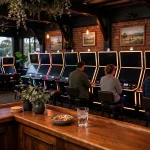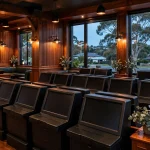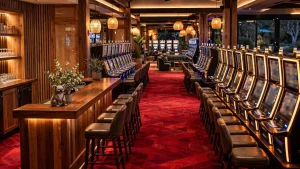
The guide distinguishes casino-operated or nearby accommodation from unverified claims about rates, dining, parking and other facilities.

A hotel search linked to a casino can point to several different things: a hotel operated by the casino, accommodation in the same complex, or an independent property chosen for its location. Those are not interchangeable arrangements. The wording of a search alone does not establish which one applies, or confirm that a particular hotel, room type or booking offer is available.
The distinction matters when comparing costs. A room rate is not the same as a casino promotion, and a package description would need to state what is included before its value could be assessed. Without confirmed terms, there is no sound basis for quoting a price, describing a discount or treating a room as part of a casino stay. A low headline figure, if encountered elsewhere, is only a starting point: the final cost depends on the actual booking conditions and what the rate covers.
Accommodation information is useful when it identifies the property and makes the booking terms clear. For a room, that means enough detail to understand the accommodation being sold, the dates and conditions attached to the rate, and any charges or inclusions that affect the total. For a deal, the conditions matter as much as the advertised saving. Without them, the saving cannot be calculated.
Choosing an online casino from Victoria calls for checking the details that matter to you, including the operator’s stated licensing and any available payment information. This list provides a concise reference for reviewing the listed options.
7Bit Casino
7Bit Casino is operated by Dama N.V. and lists a Curacao license.
Wild Tokyo
Wild Tokyo lists a Curacao license and a A$10 minimum deposit. Its stated payout times are 30–60 minutes for crypto and 1–5 days for fiat.
SkyCrown
SkyCrown lists a Tobique Gaming Commission license and a A$30 minimum deposit. Its stated payout times are around 10–15 minutes for crypto and 1–5 days for fiat.
Neospin
Neospin lists Curacao Gaming Control Board license OGL/2023/176/0095, held by Hollycorn N.V.
Uptown Pokies
Uptown Pokies lists a Curacao license, has been operating since 2017, and has a A$20 minimum deposit.
WinSpirit Casino
WinSpirit Casino lists Curacao eGaming license OGL/2024/923/0383, held by Antillephone N.V., and a A$30 minimum deposit.
DragonSlots Casino
DragonSlots Casino lists a Curacao Gaming Authority license, with Jumpman Gaming Ltd identified as the operator.
Thor Casino
Thor Casino lists a Curacao license associated with Antillephone N.V. and Versus Odds B.V. Its minimum deposit is EUR 20.
Vegaz Casino
Vegaz Casino lists Curacao license OGL/2024/1335/0780 and a EUR 20 minimum deposit.
LuckyVibe
LuckyVibe lists Curacao Gaming Control Board license OGL/2023/176/0095, held by Hollycorn N.V.
A connection to a casino also needs to be described precisely. “At the casino,” “connected to the casino” and “near a casino” can imply different locations and services. A property being described in relation to a Victorian casino does not, by itself, prove that the casino operates it or that a booking includes access to anything beyond the room. The wording is packaging until the actual terms define the product.
This is separate from questions about gaming or dining. A casino’s existence does not verify a hotel’s inventory, and hotel accommodation does not confirm what gaming or food services are available. Treating those subjects as one bundle can make a search result sound more complete than the underlying information warrants.
Victoria’s gambling framework concerns gambling activity, not hotel reservations. The Interactive Gambling Act 2001 prohibits operators from providing real-money online casino games to people in Australia, while land-based casinos in Victoria are subject to state oversight by the Victorian Commission for Gambling and Liquor Regulation. Neither point establishes hotel ownership, room availability or accommodation terms.
That boundary is useful because the word “casino” can appear beside a hotel name for reasons that have little to do with who supplies the room. A hotel may be independently operated, or a description may simply refer to its location. The relationship should be stated rather than inferred. Otherwise, the apparent convenience of one booking can be mistaken for a confirmed package.
 Casino in Western Australia: Rules and Venue DetailsLearn how online casino restrictions differ from venue details on accommodation, dining and facilities; Australian-based operators cannot offer real-money casino
 Best pokies in Brisbane: hours, venues and paymentsLearn how to distinguish gaming-area hours from venue hours, assess “best paying” claims, and check what local listings and payment details confirm.
The same caution applies to plural references to hotels. A phrase suggesting several casino hotels in Victoria is not evidence that multiple properties are affiliated with a casino, nor that each has rooms available for the dates required. Names, locations and commercial relationships need to be confirmed individually before they can support a comparison.
For a practical assessment, accommodation claims should be separated into three entries: the property itself, the room and its booking conditions, and any stated link to a casino. A deal belongs in the calculation only when its inclusions and restrictions are explicit. If those elements are not established, there is no defensible total to compare and no basis for calling the offer a saving.
A hotel stay can still be considered independently of casino facilities. The relevant measure is the room and its terms, not the assumption that a casino-related label supplies extra value. Where the property, rate or package is not clearly identified, the prudent conclusion is limited: the description indicates an accommodation interest, but does not establish a bookable room or a particular deal.
Poker-room and tournament searches concern specific facilities and events, not general accommodation. A venue’s name, or a reference to casino rooms, does not establish that it has a dedicated poker room, runs tournaments or makes seats available on particular dates. Those details require direct confirmation from the venue; they cannot be inferred from the broader label “casino”.
Legal Restriction
The Interactive Gambling Act 2001 prohibits operators from offering online casino-style games, including poker, to customers in Australia.
The legal position is clearer for online poker. The Interactive Gambling Act 2001 prohibits operators from offering online casino-style games to customers in Australia, and poker is included in that category. This is a restriction on the service being provided: a site’s overseas registration does not make it a Victorian-licensed online casino or permit it to offer online poker to Australian customers. Australia has no Victorian-licensed online casinos offering the listed casino games, including slots, roulette and blackjack.
That rule should not be stretched to answer a different question. It concerns online services, not whether a Victorian land-based venue has a poker room or holds a live tournament. The prohibition on online poker does not, by itself, confirm or disprove live poker facilities. A search for poker at a Victoria casino therefore needs two separate checks: whether the activity is online or in person, and whether the venue has published current, specific information about the live offering.
Tournament wording also needs care. A general reference to poker does not establish a schedule, format, entry conditions, registration process or available seats. None of those details can be treated as settled without a current venue announcement. A tournament title, if encountered elsewhere, is not enough to establish that the event is still running or that registration remains open. Dates and conditions are operational details, not something that can be safely derived from the venue category.
The same distinction applies to searches that combine “rooms” with casino wording. In this context, “rooms” may mean poker rooms, but it can also refer to accommodation. Neither interpretation confirms a poker facility. Hotel rooms belong to accommodation searches; a dedicated card room is a separate venue feature. Treating one as proof of the other would turn an ambiguous phrase into a claim the phrase does not support.
 Brisbane casino stays: rooms, packages and nearby hotelsLearn how to compare stay costs and booking terms, and distinguish a hotel on a casino property from separate accommodation nearby.
 Best pokies in Canberra: how to assess the claimsLearn why game titles and published RTPs may not settle comparisons, and how venue, location and access searches shape Canberra results.
Sports-bar terms and requests about whether a casino is open now or today point to separate operational details. A sports bar is not evidence of a poker room, and a general venue listing does not confirm that a particular space is open or operating at a particular time. Opening information can change, so it should come from a current venue notice rather than an assumption based on the word “casino”. These searches do not add evidence about poker facilities or tournament availability.
For anyone comparing options, the useful distinction is between a verified live offering and an online service that Australian law bars operators from supplying. Claims about live poker need venue-level confirmation; claims about online poker need to be assessed against the federal rule. Keeping those questions separate prevents an online listing from being mistaken for a lawful local casino service, and prevents a broad venue description from being mistaken for a confirmed poker room or event.
A buffet, breakfast service, resort stay and rewards programme are separate parts of a casino business. The word “resort” can suggest that these services sit under one roof, but the label alone does not establish what is available or on what terms. A meal, an overnight stay and a loyalty benefit each have different costs and conditions; combining them in one expectation would make the total difficult to assess.
Resort Terms
The term "resort" describes a broad property concept and does not automatically specify the availability of accommodation, dining, or bundled rates.
Breakfast searches often imply a practical decision: whether a meal is available before a day’s activities, whether it is included with a stay, or whether it must be purchased separately. A buffet adds another question, because the format does not establish its menu, service period or price. Those details matter more than the label. Without them, there is no sound basis for comparing a buffet breakfast with another meal arrangement or treating breakfast as part of a room package.
The same accounting applies to resort wording. A resort can refer to a broad property concept, but it does not, by itself, specify accommodation, dining, leisure facilities or bundled rates. Each component has to be established independently before a package can be valued. A headline that groups lodging and meals may describe a particular offer, but the offer’s inclusions, exclusions and conditions determine its actual cost. The word “resort” cannot do that arithmetic.
Rewards require a different calculation. A programme has value only when its earning rules, redemption options, exclusions and expiry conditions are clear. A points balance is not equivalent to cash, and a stated benefit is not necessarily available against every purchase. Without the applicable terms, assigning a monetary value to rewards would be guesswork. Nor does the existence of a casino imply that a particular rewards scheme applies to dining, accommodation or other spending.
These distinctions are useful when comparing a casino visit with a stay or meal. A breakfast benefit might be included, discounted or entirely separate; a buffet might be offered as a stand-alone purchase or attached to another arrangement. Each possibility changes the total, but none follows automatically from the words “casino”, “buffet” or “resort”. A meaningful comparison needs a defined service, its price and any conditions attached to it.
 Canberra Casino Guide: Hotels, Games and FacilitiesCompare casino-linked stays by their terms, including dates, booking channel and inclusions, alongside information on poker, dining and casino facilities.
 Best pokies in Tasmania: what players can verifyLearn how to check whether a venue and its machine area are operating, what “best-paying” can mean, and why online play is…
Employment searches belong to another category altogether. Casino jobs can refer to roles across a business, but the term does not identify current vacancies, departments, duties, pay or application requirements. Employment conditions cannot be inferred from hospitality language or from a property being described as a resort. A role has its own terms, and those terms must be assessed separately from guest offers.
The legal context is also distinct from venue services. In Victoria, the minimum age for gambling is eighteen, whether play takes place online or in person. The Interactive Gambling Act 2001 prohibits operators from providing real-money online casino-style games to people in Australia. That rule concerns the provision of online gambling services; it does not establish breakfast, buffet, resort or rewards arrangements at a land-based casino.
For budgeting, the useful distinction is between confirmed inclusions and assumptions. A meal, stay, rewards benefit and employment opportunity each require their own terms before a cost or value can be calculated. Labels can group services for presentation; they cannot replace the conditions that determine what is actually received.
Parking and online gambling are separate questions. A search for parking at a casino in Victoria concerns an on-site service and its conditions; it does not establish whether spaces, valet service or complimentary parking are available. Those details should not be inferred from the venue’s gaming status or from rules governing online services.
Attention: A claim of free parking is a price claim; without a stated condition and a final charge of zero, it should not be treated as established.
The legal position for online casino games is clearer. Under the Interactive Gambling Act 2001, Australian-based online casinos cannot operate within Australia, and federal law prevents online casino operators from offering casino games to Victorian residents. The restriction concerns the operator’s provision of the service, not the name used for a website or the location associated with a land-based casino.
The Australian Communications and Media Authority, commonly shortened to ACMA, administers enforcement of the federal Act. A website presenting itself as a Victoria-based online casino does not therefore become a lawful local casino merely by using that description. The relevant issue is whether an operator is offering prohibited online casino games to people in Australia.
Age rules apply across both forms of gambling: the minimum age in Victoria is eighteen for online and live play. Meeting that age requirement does not change the separate legal restriction on online casino operators. It is a threshold for participation, not permission for a provider to offer a prohibited service.
This distinction matters where a venue-related search combines online access with local details such as parking or dining. A physical venue’s amenities and an online gambling service are different categories. Information about one cannot establish the other, and a parking reference does not indicate that online casino games are legally available to Victorian residents.
For a parking decision, the relevant terms would be practical ones: whether parking is offered, whether valet service operates, whether a charge applies and what conditions govern access. None of those terms follows from the online-gambling rules. A claim of free parking, in particular, is a price claim; without a stated condition and a final charge of zero, it should not be treated as established.
The same separation applies to other venue-related wording that may appear alongside parking, including references to dining or bingo. Such labels do not alter the federal treatment of online casino games. Nor do they provide a basis for assuming a specific on-site service or its availability.
The useful calculation is therefore categorical rather than promotional: parking conditions belong to venue operations; online casino access is governed by federal law. Victoria’s minimum age is eighteen, while ACMA enforces the Interactive Gambling Act 2001 against prohibited online casino provision. Neither rule supplies a parking price, confirms a valet arrangement or turns an online casino offer into a lawful local service.
“Victoria casino” can refer to a search for a venue in the state rather than identify a particular property. That distinction matters when comparing nearby accommodation: distance, transport options and the relevant local area depend on the exact casino being considered. A property described as close to one venue may be impractical for a visit to another.
The first useful comparison is geographic, not promotional. Confirm the venue’s full address, then assess accommodation against that point using a consistent measure, such as walking distance or the journey by the intended transport mode. A map estimate is not a guarantee of travel time; access routes, service availability and the time of travel can change the practical result. Where the venue itself has not been identified, a ranking of nearby stays has no stable basis.
The cost of a stay also needs to be separated from the cost of getting there. A lower accommodation rate may cease to be lower once transport and other required charges are included. For a meaningful comparison, use the same dates, occupancy and cancellation conditions, and calculate the full payable total for each option. A headline rate alone does not establish the final amount.
“Casino accommodation deals” can cover very different arrangements. A promotion may concern a room, a casino activity, or both; the wording does not establish what is included. Any offer should be assessed by its conditions, expiry, exclusions and final price. If an advertised benefit depends on spending elsewhere, its face value is not equivalent to cash savings. A deal that cannot be priced from its terms is not a usable comparison.
Promotions connected with gambling also sit within Australia’s restrictive online-gambling framework. Under the Interactive Gambling Act 2001, operators cannot provide real-money online casino games to people in Australia. That prohibition covers online casino-style games, including slots, poker and table games. It does not establish the terms of a land-based accommodation offer, and a promotional phrase should not be read as proof that online play is available.
Age rules remain relevant to gambling activity: the minimum age in Victoria is eighteen for both online and live play. Accommodation and gambling are separate parts of a trip, and a booking should not be treated as confirmation of eligibility or access to gaming facilities.
For accommodation close to a casino, the decision is therefore conditional on three items being clear: the exact venue, the actual route, and the complete price under the booking terms. Without those, “nearby” and “deal” are descriptions, not measurable savings.
Contact details, bar information and baccarat availability belong to different questions, even when they are attached to the same casino name. A phone number is an identification detail; a bar listing describes a venue amenity; baccarat refers to a game. Treating one as evidence for another produces a weak comparison: a contact page does not establish what games or facilities are available.
For contact enquiries, the useful distinction is between a current channel published by the venue and a number reproduced in a directory or an old listing. Names and listings can overlap, so the business identity matters as much as the digits. A map pin can help locate a listing, but it does not confirm that a particular service is operating there. Contact information should therefore be assessed as an administrative detail, not as proof of a gaming or hospitality offering.
The legal position is clearer for baccarat played online. The Interactive Gambling Act 2001 prohibits operators from offering online casino-style games to customers in Australia. Baccarat falls within that casino-game category; the restriction is not avoided by changing the game’s name or presenting it through a website or app. The rule concerns provision of the service to people in Australia, rather than the wording used to describe a digital table.
The Interactive Gambling Act 2001 prohibits operators from offering online casino-style games to customers in Australia, a category that specifically includes baccarat regardless of the game's name or platform.
That distinction should not be blurred with a claim about a physical casino. The federal prohibition described here concerns online provision. It does not, by itself, confirm whether baccarat is available at a particular Victorian venue, in what format, or under what operating conditions. A casino name attached to a baccarat listing is not enough to establish those details.
The same separation applies to bars. A bar-related listing may indicate that a venue has hospitality facilities, but the label alone does not establish a particular bar’s location, service hours, menu or current operation. None of those details can be inferred from a contact number or from the existence of a casino. For a cost comparison, unconfirmed amenities have no reliable value and should not be counted as part of a stay or visit.
Where an enquiry concerns a specific service, the relevant evidence needs to match that service: contact information should identify the venue, while a claim about a bar or an in-person game needs a current venue-specific description. Online baccarat is a separate legal question governed by the federal restriction. Keeping these categories apart prevents a search result, map marker or generic venue label from being mistaken for confirmation of a service.
Opening hours, event dates and reopening announcements are operational details, not stable features that can be inferred from a venue’s name. A listing that appears in an older review may describe a different period; it should not be treated as a current timetable. The same applies to claims about development work, entertainment schedules or recruitment. Each needs a dated announcement from the operator or another responsible organisation before it can support a decision.
A reopening can mean different things: the return of a venue after a temporary closure, the resumption of one service, or the launch of a changed operation. Those are not interchangeable. An event listing also needs its own date and status; a past performance does not establish that the programme continues. For development announcements, the useful distinction is between a proposal and a completed project. Neither wording alone establishes that a venue is open to the public.
Reviews require similar care. A review can record one person’s experience at a particular time, but it does not establish today’s opening hours, current events or future plans. It may also combine observations about gaming, entertainment and food, although each is a separate service with its own conditions. A menu reference, for instance, does not establish when a venue is open or whether an event is scheduled. These details should not be used as substitutes for one another.
Employment information is another separate category. A general statement about casino jobs does not confirm that a particular role is available, while a past vacancy does not establish current recruitment. The practical value lies in a dated vacancy notice and its stated location, duties and conditions; without those, a claim of hiring is not a reliable indicator of the venue’s operating status.
The legal boundary matters when “open” refers to online access rather than a physical venue. Under the Interactive Gambling Act 2001, operators cannot provide real-money online casino games to people in Australia. The restriction covers casino-style games such as slots, poker, blackjack and roulette. ACMA is responsible for enforcing the federal law, while Victoria’s gambling regulator oversees land-based casinos and wagering within the state. This is a distinction between services and jurisdictions, not evidence that a particular venue is open at a particular time.
The minimum gambling age in Victoria is eighteen, for both live and online play. That age rule does not verify an event schedule, an employment opportunity or a reopening announcement. Keeping those questions separate produces a more dependable picture: operating status needs a current operational notice, events need dated listings, and development or recruitment claims need their own documentation.
A search for a casino spa or day spa in Victoria combines two separate questions: whether a particular venue has spa facilities, and where that venue is located. Those details cannot be treated as established merely because the terms appear together. The same applies to a dress code. Without confirmed venue information, there is no sound basis for describing treatments, facilities, entry requirements or clothing rules.
An address should identify a specific property, not just a state or a casino-related name. That distinction matters when comparing directions, transport options or nearby services: a broad reference to Victoria does not establish the location of an individual venue. No address should be supplied unless it can be tied to the intended property. An invented or assumed location is not a useful substitute; it can send a visitor to the wrong place.
Spa facilities are also separate from casino operations. A casino’s existence does not establish that it has a spa, offers day access or provides a particular service. Likewise, a dress-code policy cannot be inferred from the type of venue. Requirements, if any, would need to come from information specific to the property and the area being visited. Dining, gaming and other spaces could have different conditions, so a general rule should not be applied across an entire site without confirmation.
There is a further distinction between a physical venue and online casino services. In Victoria, the minimum age for gambling is eighteen, whether play is live or online. The Interactive Gambling Act 2001 prohibits operators from supplying real-money online casino games, including slots, poker and table games, to people in Australia. That legal boundary concerns gambling services; it does not establish spa access, venue addresses or dress standards.
For practical planning, those categories should remain separate. A location detail needs to identify the actual property; a spa claim needs to relate to a confirmed facility; and a dress-code statement needs to specify the relevant venue or area. Until such details are tied to a particular establishment, they cannot support a reliable visit plan. This is a matter of evidence, not preference: a polished venue description still has no operational value if its address or facilities cannot be verified.
Address Accuracy
No address should be supplied unless it can be tied to the intended property, as an assumed location can lead a visitor to the wrong place.
Restaurant information is a separate question from the existence or regulation of casino gambling. A venue’s gaming status does not establish that it has a restaurant, nor does a casino-related name identify a particular dining room. The wording “casino in Victoria” can also refer broadly to a location rather than to a named business, so a restaurant claim needs to be tied to a clearly identified venue.
For a useful comparison, the relevant details are concrete: the restaurant’s name, its current menu, service times, booking arrangements and whether it is operating. Each is a separate condition. A menu published without service hours does not establish when meals are available; a listing without a current status does not establish that the venue is open. No rates or service terms can be inferred from the word “restaurant” alone.
The same distinction applies to rooftop dining. A rooftop bar is a specific facility, not a synonym for a restaurant or a general feature of a casino. Its name, location within a property, food service and operating schedule would each need to be established independently. A reference to a rooftop bar should not be treated as proof of a rooftop restaurant, or even of a bar at a particular casino.
The legal position concerns gambling services, not dining. In Victoria, the Victorian Commission for Gambling and Liquor Regulation oversees land-based casinos. Separately, the Interactive Gambling Act 2001 prohibits operators from providing online casino-style games to people in Australia. Those rules do not confirm restaurant facilities, menus or dining hours. The legal status of gaming and the practical terms of a meal are different subjects.
The distinction matters because broad venue labels can make an unverified detail sound settled. A restaurant name may be associated with a property in one listing but absent from another; without a confirmed, current venue identity, that association is not a reliable basis for describing its offer. Likewise, “near the casino” describes a location relationship only when the property and distance are known. It does not establish that a restaurant is on site.
For dining decisions, the usable record is the one that connects a named restaurant to a specific venue and states the service conditions. Without that connection, claims about a casino restaurant, multiple restaurants or rooftop dining remain claims rather than confirmed operating details. The distinction is plain, if less exciting than a menu: a casino label is not a dining specification.
Food-court and pool searches concern separate practical details: where casual food may be available and whether swimming facilities form part of a casino visit. Neither should be inferred from the word “casino” or from information about restaurants. A food court, if present, would be a distinct facility; a restaurant listing would not establish one.
The same distinction applies to a pool. A hotel or resort association does not, by itself, establish that a pool is available to casino visitors. Nor does the existence of a pool establish who may use it, whether access is restricted to accommodation guests, or whether conditions apply. Those details require specific, current venue information.
For a visit budget, the difference matters. An assumed food outlet can change plans for meals; an assumed pool can add an amenity that may not be accessible. Without confirmed facility and access details, neither should be counted as part of the visit. No reliable conclusion about food-court service, pool availability or entry conditions follows from the casino name alone.
This is narrower than a restaurant question: it concerns a casual-food facility, not menus, restaurant service or dining hours. It is also narrower than a general resort question: the point is whether a pool exists and under what access terms, not whether accommodation is available. Keeping those categories separate prevents one type of listing from being treated as proof of another.
Any decision involving these amenities therefore depends on explicit venue information that identifies the facility and its conditions. Until that is established, food-court service and pool access remain unconfirmed, rather than assumed benefits of a casino visit.
Online casino operators cannot legally offer casino-style games to customers in Australia, including Victorian residents. Individuals are not generally committing an offence simply by accessing offshore services.
The main legal restrictions apply to providers and facilitators, rather than creating a general criminal offence for individual players who access offshore online casino services.
Check whether the service is licensed and regulated for Australian players, what payment methods it accepts, and what identity checks apply to withdrawals. Offshore casinos are outside Victoria’s gambling system, so players may have fewer protections in payment, account and complaint disputes.
Offshore casinos are not licensed or regulated under Victoria’s gambling system, so players may have fewer protections if payment, account or complaint disputes arise.
You must be at least 18 to gamble in Victoria, whether playing online or in person.
The minimum age to gamble in Victoria is 18.