Provider names and 3D presentation alone do not confirm demo access, real-money availability or the conditions attached to play.

The phrase “Microgaming slots” can point to several different kinds of play. Some people mean a particular style of slot, such as a three-dimensional presentation. Others are looking for free play, a demo version or a slot that can be played for money. Those are separate questions: the appearance of a game does not establish whether it is available in a demo mode, and a demo does not establish that the same title can be played for real money.
The provider name is only one part of identifying a slot. A useful comparison also depends on the specific title, the version offered and the conditions attached to play. “Best” has no stable meaning without a criterion. It could refer to visual design, features, volatility or a return-to-player figure, but none of those qualities follows from a provider label alone. A broad label such as “3D” describes presentation, not the financial terms of a game.
A demo is a way to play without staking real money. It can help show how a game works, but it does not establish what would happen in real-money play. A demo balance is not withdrawable, and results in a practice session do not predict later outcomes. Free play and real-money play may also appear side by side on a casino site, so the mode needs to be clear before play begins.
Real-money slot play has a different financial consequence: bets use a cash balance, and winnings are subject to the operator’s rules. If a promotion is active, slot bets generally contribute fully toward its wagering requirement. That can make slots a more direct route through a wagering target than games that count only partly, but it does not remove the target or make the bonus immediately withdrawable. The relevant calculation is the qualifying slot stake recorded under the promotion’s terms.
The distinction matters because an attractive game screen can make the mode easy to overlook. A player may be in a demo session, a cash session, or a session using promotional funds. Each has a different relationship to money that can eventually be withdrawn. The game’s visual style does not change those distinctions.
A title’s description should be separated from what it can establish financially. Three-dimensional graphics, animation and other presentation details concern how play looks. They do not indicate the probability of a particular result, the size of a payout or whether a slot contributes to a promotion. Nor does a provider name, on its own, settle whether a title is offered in a particular mode.
The same caution applies to claims about the “best” slots. Without a stated comparison measure, that label is promotional rather than analytical. A ranking based on visual appeal is not a ranking by return, and a high stated return-to-player figure, where one is published, is a theoretical measure over extensive play rather than a promise about an individual session. The game’s actual terms and the rules for any attached promotion determine how the play is treated.
For a real-money session with an active bonus, the practical point is straightforward: slot wagering generally counts in full toward the required play. The amount that qualifies still depends on the promotion’s conditions, including any restrictions on games and bet size. A slot’s contribution rate is not the same thing as a guarantee that every stake will qualify or that winnings can be withdrawn before the requirement is completed.
A clear description therefore separates three questions: what the game looks like, whether it is being played in demo or real-money mode, and how its bets are treated under any active promotion. Combining them into a single claim obscures the costs. A free session can demonstrate mechanics; it cannot establish the financial result of staking cash. A three-dimensional presentation can describe the screen; it cannot establish a slot’s value. And a provider name does not replace the game-specific terms that govern play.
For Aussie punters assessing slot play, the useful unit is not a broad catalogue label but the actual game and mode shown at the point of play. That keeps presentation, practice and real-money wagering separate—and makes the promotion’s contribution rules easier to understand before any balance is committed.
“Microgaming casino software” can refer to the platform label attached to a casino’s games, while “free slots” and “demo play” describe a different question: whether a slot can be tried without staking real money. The label alone does not establish which titles are available, how a particular game works, or whether a free-play mode is offered. Those details depend on the specific casino and game listing.
Demo play and bonus wagering should not be treated as interchangeable. A demo session is a way to try a game without placing a real-money stake. It does not, by itself, satisfy a bonus wagering requirement. A promotion is a separate arrangement: its terms determine how much must be wagered before winnings associated with the bonus can be withdrawn.
When a bonus is active, slot play generally contributes fully toward the wagering requirement. That can make slots more relevant to clearing a bonus than other game categories, but it does not remove the conditions attached to the promotion. The amount wagered still has to meet the stated requirement, and play must remain within the promotion’s rules. A slot’s presence in a casino catalogue is not evidence that every bet will qualify under every offer.
The useful distinction is therefore between access to a free-play mode and the accounting applied to real-money play under a promotion. Free play may help assess whether a game suits a player’s preferences, but it should not be counted as progress toward a bonus unless the terms explicitly say otherwise. Conversely, real-money slot play during active wagering may count toward the requirement, subject to those terms.
“Free pokies” is often used for the same broad idea as free slot play. The wording does not confirm that a particular Microgaming-branded game is available for free, nor does it establish that the casino’s software has any specific feature. A game title, demo option and bonus contribution are separate details; each needs to be checked in the relevant listing and terms.
For Australian readers, software terminology also does not change the legal position of real-money casino play. A platform name is not a substitute for checking what kind of play is being offered. The practical calculation remains straightforward: demo play is not a real-money wager, while qualifying slot bets during an active promotion generally count fully toward its wagering requirement.
A search for Microgaming games on a mobile device can cover more than slots. It may reflect interest in a broader casino catalogue, including table-style play or live-dealer formats, with the expectation that games can be reached by phone or tablet. That expectation is not evidence that a particular title, category or mobile function is available at a given site. The provider name alone does not establish the contents of a casino’s catalogue.
The same distinction applies to phrases such as “live casino games.” They describe a type of play being sought, not a confirmed product or feature. A casino may use a provider name in its marketing while offering a different selection from another site using the same name. Availability can also depend on the platform and the account’s location. Without current, operator-specific information, a general claim about a Microgaming mobile casino would be broader than the evidence supports.
Regulatory Limit
Offshore platforms do not inherit protections from Australian domestic regulators, and safeguards from bodies such as the ACMA do not apply to offshore casinos.
For mobile use, the relevant question is not only whether a page opens on a small screen. A casino game may be described as mobile-friendly without that description establishing which games work, how they operate, or whether the service is available to someone in Australia. A search for the “best” mobile option also does not produce a defensible ranking by itself. The provider label does not settle suitability, catalogue breadth or player protection.
That last point matters more than the screen size. Offshore platforms do not inherit the protections available through Australian domestic regulators. In particular, safeguards associated with bodies such as the Australian Communications and Media Authority (ACMA) do not apply to an offshore casino simply because its games can be accessed from an Australian device. A mobile interface does not change the platform’s regulatory status.
This is a practical limit, not a technical footnote. Where domestic regulatory protections do not apply, they cannot be treated as a backstop for a dispute with an offshore operator. A familiar game category, a polished phone layout or the Microgaming name does not create domestic oversight. Those are separate questions: what the site offers, whether the service is accessible, and which regulator’s protections—if any—govern the operator.
The distinction is easy to miss because mobile browsing puts the product and the operator in the same view. A game tile can be visible beside account tools and promotional material, but that presentation does not establish what protections are available if a transaction or account issue arises. Nor does the word “casino” identify a domestic licence. Product labels answer a catalogue question; they do not answer a regulatory one.
A sound assessment therefore keeps the claims narrow. A provider name can indicate the kind of content being sought, but it does not verify a game list or mobile capability. A mobile-ready appearance can indicate a design choice, but it does not establish Australian regulatory protection. And an offshore platform should not be treated as covered by ACMA protections merely because it is reached from Australia.
For Aussie gamblers, the central calculation is not whether a casino page fits a phone screen. It is whether the claims about games and access are specific enough to verify, and whether the limits of offshore protection are understood before money or account details are involved. The mobile format changes the method of access; it does not transfer domestic safeguards to the operator.
A Microgaming label does not change the legal position of an online casino in Australia. The key distinction is between the company providing the gambling service and the individual who might use a foreign-licensed site. Under the Interactive Gambling Act 2001, providing real-money interactive casino games to people in Australia from within the country is illegal for a company. The Act’s restriction is directed at the service provider; it does not make an Australian player’s use of a foreign-licensed casino a criminal offence.
Legal Distinction
Under the Interactive Gambling Act 2001, while it is illegal for a company to provide real-money interactive casino games to people in Australia from within the country, using a foreign-licensed casino is not a criminal offence for the player.
That distinction is narrower than an endorsement. It does not create a locally approved route to real-money casino play, nor does it give an offshore operator permission to provide casino games to people in Australia. A site’s overseas licence and a game-provider label answer different questions: one concerns the operator’s claimed regulatory jurisdiction, while the other identifies a software brand. Neither establishes that the casino is licensed to operate domestically.
There is no Australian domestic licence under which a real-money online casino can offer its games to residents. Accordingly, a page describing a “Microgaming casino Australia” cannot be read as evidence of a locally regulated casino market. The phrase may point to a site aimed at Australian visitors or to a catalogue that includes Microgaming software, but those descriptions do not alter the legal status of the service.
The practical effect is that the rules do not treat the operator and the player as interchangeable parties. The company that provides prohibited interactive gambling services to Australians faces the legal restriction. An individual Australian who plays on a foreign-licensed site is not, on that basis, committing an offence under the Act. That does not make the activity domestically regulated or place the player under the protections that apply to locally licensed gambling.
For a Microgaming-branded casino, the relevant checks therefore begin with the operator and the nature of its service, not with the software name. A game provider’s presence does not confer a licence on the casino, and a foreign licence is not an Australian authorisation. The same distinction applies whether a site calls itself an online casino, a pokies platform or a Microgaming casino: the terminology does not create a domestic licence.
The wording “best Microgaming online casinos in Australia” can suggest a ranking within a lawful local market. That implication is misleading if it is taken to mean Australian-licensed real-money casinos. No such domestic licensing category exists. A ranking may describe offshore sites, but it cannot convert those operators into locally authorised providers or establish that their services are approved for the Australian market.
The legal position can therefore be stated without confusing player liability with operator legality. The Interactive Gambling Act 2001 prohibits companies from supplying real-money interactive casino games to people in Australia from within Australia, while it does not criminalise an individual merely for playing at a foreign-licensed site. Those are separate points, not competing interpretations. A Microgaming name identifies a software association; it does not settle either point or supply a domestic licence.
A site described as offering Microgaming pokies involves two separate questions: whether its catalogue includes the games being sought, and where the casino itself is registered and licensed. The provider label does not establish the operator’s jurisdiction, the scope of its licence or whether the service can be reached from Australia. Those details belong to the casino, not to the game category.
Curaçao is the most common registration location among online casinos that accept Australian players. Malta and Anjouan are also jurisdictions under which offshore casinos may hold licences. A foreign licence describes oversight in the issuing jurisdiction; it is not an Australian casino licence and does not confer permission to provide real-money casino services to people in Australia.
The legal distinction matters even when a website is visible or a page refers to Australian customers. Under the Interactive Gambling Act 2001, offshore operators are not authorised to provide real-money online casino games to people physically in Australia. The law does not make an individual Australian player an offender merely for playing at a foreign-licensed site. That distinction should not be mistaken for domestic approval or a guarantee of practical access: offshore casino services may be blocked, and access can vary.
A reference to a licence therefore needs careful interpretation. Registration, a licence issued overseas and legal permission to serve Australian residents are not interchangeable claims. Nor does a licence alone confirm that a particular game catalogue is available, that a site’s statements remain current, or that Australian consumer protections apply. Domestic protections administered by bodies such as the Australian Communications and Media Authority do not extend to offshore platforms.
The wording “best” or “trusted” does not resolve these checks. A site’s own claims, a directory entry or a review can describe an operator, but none changes the location of its licence or the Australian legal position. Current licence status is also time-sensitive; a past description cannot establish the status of an operator at a later date. Likewise, a casino’s general association with a provider does not verify that Microgaming titles are offered to a particular visitor.
For Australian readers, the practical meaning of Microgaming casino sites is therefore narrower than a catalogue label may suggest. It points to offshore operators that may be associated with the provider, while registration and licensing remain operator-level matters. A Curaçao registration is common in this market, but it should not be read as domestic regulation, guaranteed access or a statement that a specific casino is suitable for Australian use.
A Microgaming real-money casino search describes an intended type of play, not confirmation that a particular site offers it or can lawfully provide it to people in Australia. Under the Interactive Gambling Act 2001, supplying real-money online casino games to people physically in Australia is prohibited. The payment mechanics below therefore describe general account processing, not a recommendation to use an offshore service.
Deposits may be offered through cards, e-wallets or cryptocurrency, but payment routes are not interchangeable. Australian rules prohibit credit-card payments for online gambling services. A listed card option should not be treated as proof that every card type can be used. Before funds are sent, the payment page and terms should make clear which methods are accepted, whether the account name must match the payment method, and whether the same route can be used for withdrawals.
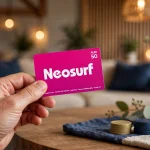
Neosurf is a deposit-only option where accepted: it cannot receive withdrawals. That distinction affects the cash-out plan from the beginning. A deposit method is not necessarily a withdrawal method, and a casino may process a payout through a different channel. The relevant comparison is not only how money enters the account, but what route is available for money leaving it.
Identity checks can become the point where a payout stops. A specialist review identifies account verification status as a frequent trigger for withdrawal delays; that is a report about the platforms it assessed, not a guarantee about every operator. The practical implication is straightforward: an account that is not verified may take longer to clear for payment.
A specialist review also reports that casinos may request know-your-customer documents for withdrawals above operator-set thresholds. These documents include government-issued identification and proof of address. The threshold and document requirements can vary by operator, so the terms should be checked before depositing. Details on the account should match the submitted documents; discrepancies can create additional checks rather than shorten the process.
Verification is not merely a formality attached to the final payment. It can affect when a withdrawal is approved, while the payment provider controls the subsequent transfer. Those are separate stages: casino approval does not mean the funds have already reached a bank or wallet.
A withdrawal timeline should be read as a sequence: request submitted, identity and account checks completed, casino approval issued, then payment processing. Any stated processing time needs to be understood as applying to a particular stage. A fast transfer service cannot remove a pending casino review, and an approved payout can still be subject to the receiving provider’s processing.
For a real-money Microgaming casino, the relevant choice is therefore not simply the advertised deposit method. It is the full route from funding to withdrawal, including eligible payment methods, verification requirements and the conditions for approval. Terms should be reviewed before play, and identity verification completed before requesting a first withdrawal. No payment label replaces those checks.
A casino bonus is not withdrawable value simply because it appears in an account balance. The wagering requirement sets the amount of betting that must be completed before bonus-related winnings can be released. The offer’s headline size does not show that cost; the terms do.
A specialist review reports wagering requirements of 30x–45x the bonus amount for pokies bonuses. That range is a reported finding, not a fixed market standard. The calculation depends on the wording of the particular offer: a requirement is applied to the stated bonus amount, and the resulting total must be wagered before withdrawal. A higher multiplier means more betting is required to reach the same release point.
Game weighting changes the calculation further. A wager on a game that contributes fully reduces the remaining requirement more than an equal wager on a game with partial contribution. Slots generally count fully, while live-table play contributes less. A bonus can therefore take longer to clear when play is concentrated in lower-contribution categories, even if the cash wagered is unchanged.
The relevant terms may also set a maximum bet during wagering and exclude certain games. Exceeding that limit or playing excluded games can void bonus winnings. These are not secondary details: they determine whether activity counts and whether the resulting balance remains eligible for withdrawal. A specialist review identifies wagering, game weighting and maximum-bet rules as conditions attached to bonus offers; the exact wording of each offer remains decisive.
The full terms and conditions should be reviewed before play, including the conditions under Account – Promotions. These bonus conditions are unconventional compared with standard offers. While wagering remains active, a withdrawal request may be declined, or the bonus and related winnings may be forfeited. The requirement must be cleared before a withdrawal request is accepted.
This is separate from payment processing. Clearing wagering establishes whether funds are eligible to be withdrawn; it does not determine how quickly a payment method transfers them after approval. A bonus balance that has not met its release conditions is not made withdrawable by a fast payment method.
For a Microgaming-branded bonus, the same arithmetic applies only if the offer’s terms specify the relevant amount, eligible games, contribution rates and maximum bet. The label “welcome bonus” or “deposit bonus” does not settle those conditions. Without the full terms, the bonus’s usable value cannot be calculated.
“No deposit” and “demo” describe different kinds of play. A demo lets a player try a slot without wagering casino bonus funds. A no-deposit promotion, by contrast, may provide bonus funds for real-money play under stated terms. The distinction matters because demo activity does not clear wagering attached to a promotion.
A promotion’s wagering requirement sets how much must be bet before winnings become withdrawable. Slots generally count fully toward that requirement, but full contribution does not remove the requirement itself. If bonus funds are subject to wagering, slot bets count towards completing it; until it is cleared, a withdrawal may be blocked. Withdrawing before completion can mean the request is declined or the bonus and associated winnings are forfeited.
The calculation therefore starts with the terms, not the advertised label. A “no-deposit” offer is not automatically cash that can be withdrawn. Its conditions determine whether wagering applies, which play counts, and when winnings become eligible for withdrawal. A demo, meanwhile, is a way to try a slot, not a route for turning promotional funds into withdrawable money.
A promo code can identify an offer, but it does not replace its terms. The relevant details are the wagering requirement, eligible games and any maximum bet while wagering. Exceeding a stated maximum or playing an excluded game can void bonus winnings. The attractive part of an offer is its opening balance; the operative figure is what remains withdrawable after its conditions are met. Packaging is not a payment method.
The same distinction applies when considering a newly presented casino or a site described as a leading Microgaming destination. Those labels do not establish the value of a promotion. For an Australian audience, real-money online casino services are prohibited under the Interactive Gambling Act 2001; a promotional label does not change that legal position.
Demo play can still be assessed on its own terms: it is practice without the bonus-wagering calculation. Once a promotion is active, however, the accounting changes. Bets on slots generally contribute fully, yet the applicable requirement must still be completed before withdrawal. The practical comparison is not “free” against “paid”; it is non-wagering trial play against bonus funds carrying conditions.
Choosing an online casino from Australia calls for checking the details that are available, such as licensing and payment terms. Use these listings as a starting point and verify that each casino suits your needs before signing up.
7Bit Casino
7Bit Casino is operated by Dama N.V. and lists a Curacao license.
Wild Tokyo
Wild Tokyo lists a Curacao license and a minimum deposit of A$10. Its stated payout times are 30–60 minutes for crypto and 1–5 days for fiat.
SkyCrown
SkyCrown lists a Tobique Gaming Commission license and a minimum deposit of A$30. Its stated payout times are around 10–15 minutes for crypto and 1–5 days for fiat.
Neospin
Neospin lists Curacao Gaming Control Board license OGL/2023/176/0095, associated with Hollycorn N.V.
Uptown Pokies
Uptown Pokies has been operating since 2017 and lists a Curacao license. Its minimum deposit is A$20.
WinSpirit Casino
WinSpirit Casino lists Curacao eGaming license OGL/2024/923/0383, associated with Antillephone N.V. Its minimum deposit is A$30.
DragonSlots Casino
DragonSlots Casino lists a Curacao Gaming Authority license and is associated with Jumpman Gaming Ltd.
Thor Casino
Thor Casino lists a Curacao license through Antillephone N.V. and is associated with Versus Odds B.V. Its minimum deposit is EUR 20.
Vegaz Casino
Vegaz Casino lists Curacao license OGL/2024/1335/0780. Its minimum deposit is EUR 20.
LuckyVibe
LuckyVibe lists Curacao Gaming Control Board license OGL/2023/176/0095, associated with Hollycorn N.V.
A list of casinos associated with Microgaming can look like a catalogue of confirmed options. It is not, by itself, evidence that a particular operator currently offers the software, has a live-casino section, or is suitable for Aussie punters. Those are separate claims and require separate support.
A specialist review has reported that four casinos on its list held active licences from recognised offshore authorities. That is a time-sensitive statement about the operators covered by that review, not a standing endorsement or proof of their current services. Licence status should be tied to the named operator and the relevant authority; a list entry alone does not establish either. Nor does an offshore licence establish that a casino is locally licensed in Australia.
The same distinction applies to live-casino claims. A Microgaming label does not confirm a live table catalogue, the provider of those tables, or whether the games are available to a particular account. A live-casino page may describe a separate part of an operator’s offering. Without current operator-specific evidence, claims about particular live products or their availability remain unsubstantiated.
There is also a limit to what a licence can establish for an Australian resident. Offshore platforms do not carry the player protections available through domestic regulators such as the Australian Communications and Media Authority. A licence is a regulatory credential for the operator; it is not equivalent to domestic oversight or a guarantee of recourse if a dispute arises. Australian law also prohibits providers from offering real-money interactive casino games to people in Australia, and access to offshore services may be blocked.
Accordingly, a “top” list should not be treated as a ranking of verified live-casino options. At most, it is a snapshot of the operators and claims included in that particular publication. The evidence needed for a useful comparison would identify the operator, specify the authority behind any licence claim, and support any statement about its current live-casino catalogue. Without those details, ranking language adds presentation, not verification.
Free spins are promotional play, not a cash balance that can automatically be withdrawn. Any resulting winnings remain subject to the promotion’s conditions. For a Microgaming-labelled offer, the label alone does not establish which games are included or how the promotion treats their winnings; those points depend on the terms attached to the offer.
Wagering requirements set the amount of play required before bonus-related winnings can be withdrawn. The calculation must be read alongside game weighting: a spin may count differently from its face value if the relevant game contributes less than the full amount. Slots generally contribute fully toward wagering, but that does not override a promotion’s list of eligible games or other specific rules.
A specialist review describes bonus offers as subject to wagering, game-weighting and maximum-bet rules. These conditions determine the practical value of free pokies more than the advertised spin count. A high number of spins can still produce winnings that remain locked until the stated wagering is completed. If a promotion excludes particular games, play on those games may not advance the requirement; exceeding the maximum bet can also void bonus winnings.
The full terms and conditions should be reviewed before promotional play begins, including the promotion details under Account – Promotions. The wagering conditions may differ from standard offers. While wagering remains active, a withdrawal request may be declined; withdrawing before completion can also forfeit the bonus and related winnings. The balance shown during play is therefore not necessarily the amount available for withdrawal.
Free-spins terms should be checked for the eligible games, the contribution assigned to those games, the maximum permitted bet and the point at which wagering is considered complete. These are separate conditions, not interchangeable descriptions of one restriction. A promotion can count slot play fully while still excluding a particular game or limiting the stake allowed during play.
The same distinction applies when an offer is described as free Microgaming spins or free pokies. Promotional wording identifies the format of the offer; it does not settle the withdrawal calculation. Until the relevant conditions are met, the potential winnings remain conditional rather than cashable.