A practical guide to comparing game claims, checking venue details and understanding limits without treating random outcomes as predictions.
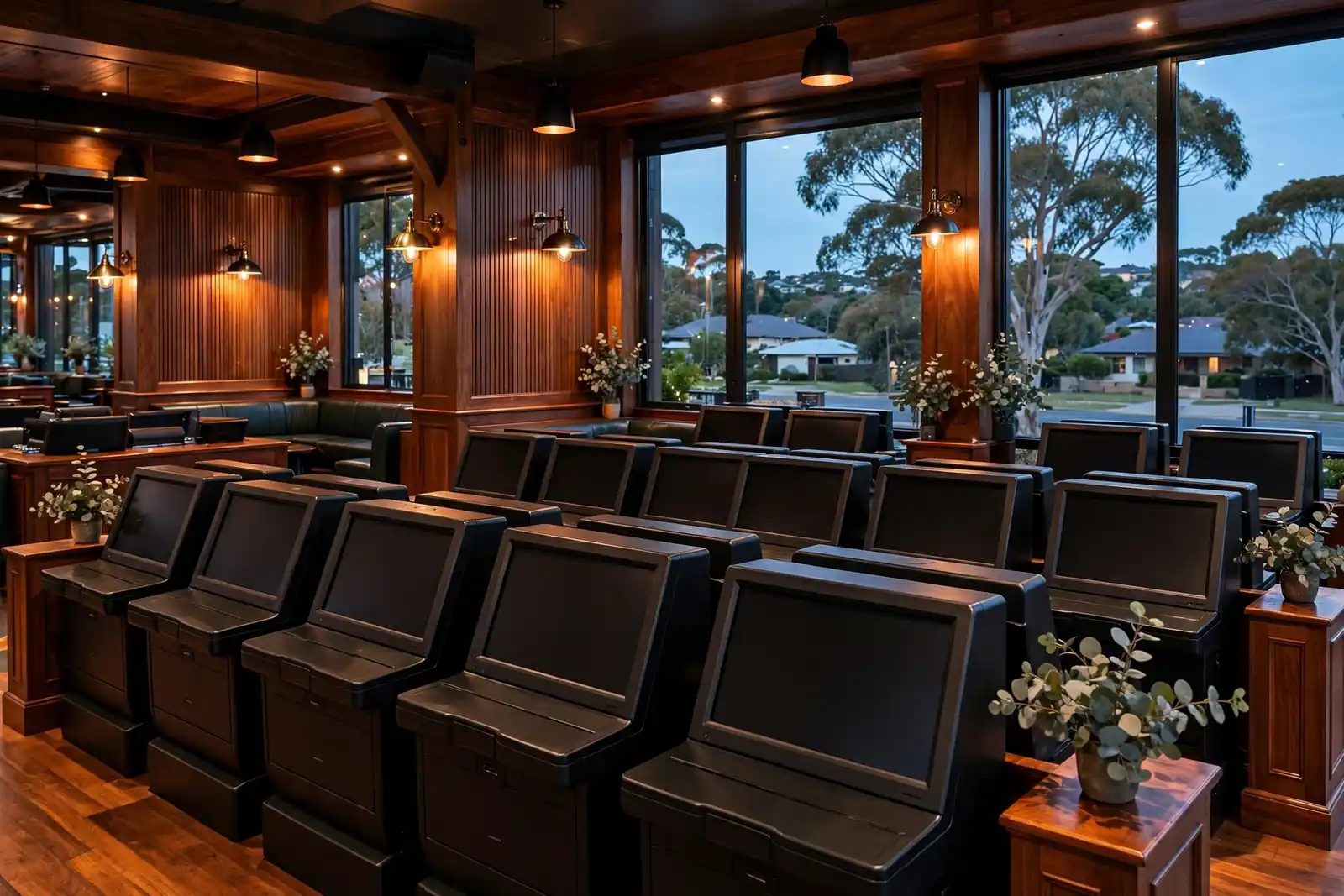
“Best” is not a measurable property of a pokie unless the comparison states what is being measured. A game may be judged by its theme, features, volatility or published return-to-player setting, but those measures answer different questions. None identifies a machine that will pay out on demand. A list described as the best pokies in South Australia is only useful if its criteria and evidence are clear.
The outcome of each spin is determined by a Random Number Generator, and each spin is an independent event. A previous win does not make a further win more likely; a run of losses does not create a debt the machine must repay. Short-term results can vary sharply, even when the game’s published settings are unchanged. That is a feature of random outcomes, not proof that a particular machine is due.
Return to player, or RTP, is a theoretical percentage calculated over a large volume of play. It is not a promise about an individual session, a fixed share returned to each person or a forecast of when a win will occur. A higher stated RTP can be relevant when comparing like with like, but it cannot turn a random result into a predictable one. It also does not, by itself, establish that a particular venue’s machine uses that setting.
Choosing online pokies for South Australia means checking the details that matter to you, including licensing and payment information where available. Use this list as a starting point and confirm current terms and availability before playing.
7Bit Casino
7Bit Casino is operated by Dama N.V. and lists a Curacao license.
Wild Tokyo
Wild Tokyo lists a Curacao license and a minimum deposit of A$10. Its stated payout times are 30–60 minutes for crypto and 1–5 days for fiat.
SkyCrown
SkyCrown lists a Tobique Gaming Commission license and a minimum deposit of A$30. Its stated payout times are around 10–15 minutes for crypto and 1–5 days for fiat.
Neospin
Neospin lists a Curacao Gaming Control Board license, OGL/2023/176/0095, held by Hollycorn N.V.
Uptown Pokies
Uptown Pokies lists a Curacao license, has operated since 2017, and sets a minimum deposit of A$20.
WinSpirit Casino
WinSpirit Casino lists a Curacao eGaming license, OGL/2024/923/0383, held by Antillephone N.V. Its stated minimum deposit is A$30.
DragonSlots Casino
DragonSlots Casino lists a Curacao Gaming Authority license and names Jumpman Gaming Ltd.
Thor Casino
Thor Casino lists a Curacao license associated with Antillephone N.V. and Versus Odds B.V. Its stated minimum deposit is EUR 20.
Vegaz Casino
Vegaz Casino lists Curacao license OGL/2024/1335/0780 and a minimum deposit of EUR 20.
LuckyVibe
LuckyVibe lists a Curacao Gaming Control Board license, OGL/2023/176/0095, held by Hollycorn N.V.
The comparison becomes less straightforward because a specialist review has reported that some providers allow casinos to select among multiple RTP settings for the same pokie. If that applies, identical-looking versions of a game may not share the same return percentage at different casinos. The game title alone therefore does not settle the comparison. The applicable setting would need to be identified and tied to the specific version being assessed.
This distinction matters when considering claims about the best-paying pokies in South Australia. A ranking based only on game names leaves out the setting that may affect the theoretical return. A ranking based on reported wins has a different weakness: past outcomes do not establish what the next spin will do, or what another player’s session will produce. A large payout is an event, not a dependable measure of future performance.
A useful comparison needs to keep the measures separate. RTP concerns long-run theoretical return; volatility describes how results may be distributed over play; features describe how a game works. A pokie can have a higher theoretical return and still produce extended periods without a substantial win. Another may deliver more frequent small outcomes without producing a larger total return. Those characteristics do not cancel the randomness of individual spins.
The same caution applies to claims about South Australia casino pokies. A title appearing at a South Australian venue does not, by itself, show its RTP setting, recent performance or likely result for any particular player. Nor does a venue’s reputation prove that its machines pay more. Without comparable information about the actual settings and a consistent measure, “best” remains a label rather than a demonstrated result.
Searches for pokies in South Australia may also mix up different kinds of comparison: a game’s design, its theoretical return, a venue’s machine selection and an individual’s experience. These are not interchangeable. A personal account can describe what happened in one session; it cannot establish a general payout pattern. A list of popular titles may reflect familiarity or preference, not superior returns.
For the same reason, the phrase “best pokies in South Australia” should not be treated as a verified league table. No specific game can be ranked as the best-paying option without evidence that identifies the game and its relevant setting, and even that would describe theoretical return rather than guarantee a result. The word “best” needs a stated criterion before it carries analytical weight.
Online and venue-based play also should not be blended into one comparison. Real-money online casino games, including pokies, cannot lawfully be offered to people in Australia by operators under the current domestic framework. A title found on an offshore site is not evidence of a South Australian venue’s machine settings or performance. The name of a game may travel; its configuration and legal context do not automatically follow.
For a practical assessment, the soundest distinction is between what can be checked and what cannot be predicted. A stated RTP setting, where reliably tied to the particular game version, can support a theoretical comparison. A spin’s outcome cannot be forecast from earlier results. That leaves no defensible shortcut from a “best” label to an expectation of winning: the label may describe a chosen feature, but it cannot remove the uncertainty built into the game.
Attention: A label like "best pokies" does not guarantee a win or remove the randomness and uncertainty built into the game.
A venue being open does not, by itself, establish that its pokies are operating. Hospitality areas and gaming areas can have different schedules, and a venue may admit customers while its machines are unavailable. The reverse distinction matters too: a published machine schedule is not confirmation that a particular venue is open at this moment.
That is why “open now” needs two checks: the venue’s current status and the operating status of its gaming area. A general business-hours listing may answer only the first. A venue’s own current notice or a direct confirmation is more relevant to machine availability, particularly when hours may vary by day or circumstances. Without a live confirmation, a listing should be treated as a schedule, not proof of present operation.
Early opening searches have the same limitation. A venue that opens in the morning may not have pokies operating from the moment its doors open. Late trading does not prove that machines remain available until closing either. The machine schedule is the detail that resolves the distinction; an address or a general “open” label does not.
The practical sequence is simple: establish whether the premises are open, then confirm whether the gaming area is operating and whether its hours match the intended visit. If information comes from a third-party listing, it may not reflect a change made by the venue. A dated notice is more useful than an undated directory entry, but neither can establish live status if the schedule has changed since publication.
Opening hours also connect to a venue’s responsibilities while gaming machines are in use. A report by regionriverina.com.au says that, from 1 July, venues with more than 20 gaming machines are required to have a dedicated responsible gambling officer (RGO) on duty during machine operating hours. The key condition is operation of the machines, not simply whether the venue’s doors are open.
The report also describes a one-month grace period for venues to remove signage and bring in responsible gambling officers. That transition period is relevant when interpreting a dated account of the change: it does not establish the present staffing arrangement at any particular venue. A current, venue-specific confirmation would be needed to establish who is on duty.
The same report says venues will be required to keep a gambling incident register. It is intended to document events that may indicate a patron is at risk of gambling harm or is already affected by it. This is an operational record, not a public indicator of whether machines are running. Its existence does not verify opening hours, and an open venue listing cannot show whether an incident has been recorded.
These details should not be collapsed into one assumption. A venue can be open without its gaming machines operating; machine operating hours are the relevant period for the reported RGO duty. A staffing requirement, in turn, does not tell whether a specific venue is open now. Each claim answers a different question.
A current listing can be a useful starting point, but its wording needs to be read narrowly. “Open” may refer to the venue as a whole. “Gaming hours” is more specific, though a published schedule still describes planned availability rather than confirming current operation. If the two are not stated separately, the listing leaves an important gap.
Searches for pokies operating early or late often seek a definite yes or no. The available evidence needs to support that precision. A broad business-hours page cannot establish machine access at a particular time, and one venue’s schedule says nothing about another’s. No single general statement should be treated as a live status report for South Australia.
Opening information also says nothing about a pokie’s payout percentage. Availability is an hours question; payout information is a separate matter and cannot be inferred from the venue being open or from its machines operating. Combining the two turns a straightforward timing check into a claim the schedule does not support.
For a visit planned around a particular time, the useful confirmation is therefore specific: the venue is open, the gaming area is operating, and the stated hours apply on that day. If any of those points is unclear, “open now” remains unconfirmed. A precise distinction is less convenient than a single label, but it prevents a premises-hours listing from being mistaken for proof that pokies are available.
A request for pokies near an airport or the CBD is a location question, not a ranking. The useful answer depends on the exact starting point and the destination’s confirmed address. “Near” has no fixed distance: a venue can look close on a map yet require a longer road journey, while a route’s distance changes with the selected entrance and travel mode.
South Australia is a broad location label rather than a single airport or central district. A search for pokies near the airport therefore needs the airport named, and a CBD search needs the city or town specified. That distinction matters especially when a search uses only “South Australia” or “central South Australia”: those phrases do not identify one point from which distance can be measured.
A location listing should be checked against the venue’s own current address, then compared with a map pin that resolves to the same premises. A business name alone is not enough. Similar names, outdated directories and pins placed near a property rather than at its entrance can all distort the apparent distance. If the address and map pin disagree, the route estimate is not dependable.
For an airport trip, the relevant comparison is the route from the airport’s public access point to the venue entrance, not a straight line drawn between two map pins. For a CBD trip, the starting point should be the specific central address or landmark, rather than the CBD label as a whole. A distance in kilometres without a named origin and destination is not a complete comparison; it is a number without a defined measurement.
The same checks apply to requests about northern areas, nearby suburbs or towns, and places whose names may occur in more than one state. State abbreviations and place names can be ambiguous. Confirm the state and locality attached to the address before treating a result as South Australian. A listing outside the intended area does not become local merely because it appears beside a broad regional phrase.
“Near me” is also dependent on the location used by the device or mapping service. The results can change when that location is inaccurate or when the map centres on a different suburb, terminal or street. Any distance comparison should therefore use a clearly identified starting point and the venue’s street address, with the route recalculated from those endpoints.
A practical location check is limited but precise: confirm the full address, confirm that the map pin lands on the same venue, identify the intended airport or CBD starting point, and compare the mapped route rather than relying on a label such as “nearby.” These checks establish geographic proximity only. They do not establish that a venue is open, that its pokies are operating, or that a particular machine is available; those are separate questions.
The distinction is important for searches covering an airport, central district and surrounding areas at once. A result can be geographically plausible without being a verified match for the intended destination. Until the address and route align, a claim that a venue is close to a South Australian airport or CBD should not be treated as a measured fact.
Real-money online pokies are not a lawful service for operators to provide to people in Australia. The Interactive Gambling Act 2001 prohibits that offer, and Australia has no licensed online casino. An offshore site accepting Australian customers does not become locally licensed by doing so. The law targets operators rather than individual players, but that distinction offers no protection if a foreign operator withholds a withdrawal: Australian players have no legal recourse in Australia to recover those winnings.
A no-deposit offer or a claim of “best paying” pokies does not change the legal position. Nor does a site’s willingness to accept deposits from South Australia establish that it is authorised to provide online casino games here. The commercial question is not only what a bonus promises, but how much turnover and what other conditions stand between the offer and a cashable balance.
A specialist review advises treating wagering requirements at 35x or below as preferable and describes requirements above 40x as punishing. That is an assessment from a review, not a legal standard or a guarantee that a bonus is worthwhile.
The arithmetic shows why the multiplier matters. A $500 bonus with a 40x requirement calls for $20,000 in bets before winnings can be withdrawn. If the requirement applies to a $500 deposit plus a $500 bonus, a 35x multiplier applies to $1,000, making the turnover $35,000. Neither figure is money paid to the player; both are the required betting volume under those stated terms.
The wording of the condition matters as much as the multiplier. Terms may calculate turnover against the bonus alone or against the combined deposit and bonus. A maximum bet while wagering, excluded games, expiry conditions and withdrawal restrictions can also affect whether the balance remains eligible. A large headline offer can therefore carry a substantial turnover obligation without creating an equivalent withdrawable amount.
A free-spin offer may limit the winnings that can be cashed out. Some offshore casinos also set weekly or monthly withdrawal caps of $5,000–$10,000; under those reported terms, a $50,000 jackpot could be paid over several years rather than in one transfer. These are examples of conditions to inspect, not a description of every site’s rules.
Legal Risk
Real-money online casino games cannot lawfully be offered to people in Australia; players have no legal recourse in Australia to recover winnings from offshore operators.
Identity checks can be another condition before funds are released. Required documents may include proof of identity and address, with some operators also requesting a selfie holding identification. Documents should be checked against the operator’s stated requirements before any first withdrawal is attempted; verification does not establish that the operator is licensed or that payment is assured.
BetStop applies only to Australian-licensed operators and does not bind offshore sites. Since no Australian-licensed online casino exists, it should not be treated as a safeguard against an offshore casino continuing to accept activity or refusing a payout. The practical calculation is stark: turnover determines how much must be wagered, caps determine the pace of any permitted withdrawal, and Australian legal recourse does not secure payment from an offshore operator.
A South Australian venue’s pokies are part of a regulated operating environment, not a measure of how likely a player is to win. Venue-level oversight concerns staffing and the handling of gambling-related incidents; it does not establish that one venue offers better results than another.
A report published by regionriverina.com.au describes a staffing requirement applying from 1 July to venues with more than 20 gaming machines: a dedicated responsible gambling officer (RGO) must be on duty whenever those machines are operating. The threshold is based on the venue’s machine count, and the duty is tied to operating time. It is therefore an oversight condition attached to the venue’s gaming operation, rather than a ranking criterion for its pokies.
The same report says venues will also need to maintain a gambling incident register. The register is intended to capture details of incidents, including occasions when a patron’s behaviour indicates possible gambling harm. That makes the record-keeping duty part of the venue’s response to observed conduct, alongside the presence of the RGO where the staffing threshold applies.
These requirements give a more concrete basis for assessing venue oversight than labels such as “best pokies venue”. A claim about a venue’s quality would need evidence relevant to the claim; compliance duties alone do not show which games are available, how a particular machine is configured, or what a player will receive. Nor does the presence of an officer alter the random outcome of an individual spin.
For a venue comparison, the useful distinction is between documented operating safeguards and promotional language. The RGO requirement concerns who must be present while qualifying gaming machines are running. The incident register concerns what the venue records when conduct suggests a patron may be experiencing harm. Neither is a promise of a particular outcome, and neither turns a venue into a reliable source of winnings.
The distinction also matters when a venue has a large gaming floor. A machine count above the stated threshold triggers the reported staffing condition; the register requirement concerns recording relevant incidents. These are separate functions: one places a responsible gambling officer on duty during machine operation, while the other creates a record of events that may indicate harm. The practical purpose is oversight within the venue, not a scorecard for ranking South Australian pokies venues.
Accordingly, venue-level scrutiny is best understood through the responsibilities attached to operating pokies, rather than through claims that a location is “best”. Staffing and incident documentation describe controls around gambling activity. They do not supply a venue ranking or establish that one set of machines is more favourable than another.
A venue’s regular trading hours and the hours when its pokies operate are separate details. A venue may publish when its doors are open without stating whether the gaming area runs for the same period. A claim of round-the-clock access is meaningful only if the schedule covers the machines, not merely the wider venue.
For South Australia, a general statement that pokies are available around the clock cannot establish the schedule at a particular location. Hours need to be checked against the venue’s own current information. Where the published details are unclear, they do not confirm continuous machine access.
A useful opening-hours notice identifies the relevant venue and the days its pokies operate. It should make clear whether the stated hours apply to the gaming area or only to other parts of the premises. If separate schedules appear for different areas, the machine schedule is the one that answers a question about playing pokies.
The date of the information matters. A listing copied into a directory may not reflect a later change, while a broad description such as “open all day” may refer to the venue rather than its gaming facilities. For a planned visit, the stronger basis is a current schedule issued by the venue, with any stated exceptions read alongside the regular hours.
“24-hour” describes continuous availability, not a promise that every venue or every machine operates without interruption. The phrase should be tied to a named location and an explicit schedule. Without that link, it is a general label, not evidence of South Australian machine hours.
The same distinction applies to claims about a venue’s standard opening pattern. Published hours can describe the usual schedule, but they should not be treated as confirmation that every date follows it. If the schedule lists exceptions or does not specify machine access, the hours remain uncertain for that purpose.
A practical comparison therefore has two fields: the venue’s stated trading hours and the stated operating hours for its pokies. If only one is available, it answers only one part of the question. A venue being open does not, by itself, establish that its gaming machines are operating; likewise, a broad description of machine availability should not replace a date-specific schedule.
For anyone assessing regular access, the decisive detail is not the phrase “open 24 hours” on its own. It is a current, venue-specific statement that identifies when the pokies operate. Without that, no particular South Australian venue can be described as having continuous machine hours.
A Crown-branded casino search and a search for pokies in South Australia describe different things. A brand name in a result does not establish that a Crown venue or Crown pokies are located in the state. Venue location, the games available there and the terms attached to a particular machine each need separate confirmation; one cannot be inferred from the other.
The distinction matters when comparing a named casino with local options. A brand may be part of the wording people use to describe the experience they want, but it is not evidence of a South Australian venue, a particular pokies room or a machine lineup. Without reliable location and game information, there is no sound basis for presenting Crown as a local choice or ranking it against South Australian venues.
The same care applies to claims about the best pokies room. A room’s name or association with a casino brand does not establish its facilities, machine selection or payout conditions. Those are venue-specific details, not properties that can be assumed from the word “Crown”. A comparison that skips those distinctions may look precise while answering a different question.
Maximum cash payout also cannot be assigned to a venue or brand as a single figure without details of the relevant game and its rules. A stated maximum, where one is published, describes a condition of that game; it does not promise that a player will receive that amount. Any practical comparison needs to identify what the figure applies to and whether other terms affect payment. Without those details, a maximum payout claim is not a usable basis for choosing a room.
There is a further boundary between physical venues and online services. Under the Interactive Gambling Act 2001, operators cannot legally provide real-money online casino games, including pokies, to people in Australia. That rule does not turn a casino brand in an online listing into evidence of a lawful Australian online casino. The law addresses operators rather than imposing a penalty on individual players, but winnings from an offshore site carry no Australian legal recourse if the operator refuses payment.
For South Australian venue comparisons, the useful test is therefore specific: establish the location, confirm what is actually offered there, and read the applicable payout terms rather than treating a brand name as proof. Until those details are established, Crown-branded searches and South Australian pokies remain separate categories, not a verified match.
A club in a central business district is not, by that description alone, evidence that pokies are available there. The venue’s name, location and gaming facilities are separate details, and each needs confirmation from information that identifies the specific club. A map pin or a broad category such as “club” does not establish that gaming machines are on site.
For South Australian clubs, a reliable check starts with the venue’s own current information. It should identify the premises and state whether pokies are offered, rather than relying on a directory label, an old review or a search-result summary. If that information is absent or unclear, the practical status remains unconfirmed. The same standard applies to claims about a club being in the CBD: a city-wide description does not establish an exact address or proximity to a particular landmark.
“Best” is also not a measurable description of a club. Without comparable, verified details about the premises and its machines, a ranking would turn an unsupported impression into a recommendation. The number of machines, available games and any machine-specific settings should not be inferred from a venue’s size, name or general reputation.
This distinction matters because the CBD wording can blur several different questions: whether a club exists at a stated address, whether it operates pokies, and whether a particular game or machine setting is available there. Evidence for one does not settle the others. Venue material should be checked for the exact premises and the exact facility being described; where those details conflict or are missing, the claim should not be treated as confirmed.
Self-exclusion is a separate issue from finding a club. It concerns a restriction on gambling access, not a way to assess whether a CBD venue has pokies or which venue is preferable. The general availability of limit and self-exclusion tools does not establish the arrangements at an individual club. Venue-specific procedures therefore need to be confirmed with that venue rather than assumed from its location or category.
The sound conclusion for a CBD club is narrow: rely on information that ties the gaming facility to the named premises. Without that link, a listing can establish neither that pokies are present nor that the club belongs on a “best” list. A precise location label is not a gaming-facility record, and a club label is not proof of a particular machine.
Cashless payments and pokies are separate questions. PayID is a way to address a bank transfer: it links an email address, mobile number or ABN to an account through the New Payments Platform (NPP). It is not a payment card or a statement about what a venue’s machines accept. Whether a South Australian venue offers cashless payments, and which methods it supports, requires confirmation from that venue.
A PayID option also says nothing about an operator’s licensing, game fairness or the return settings of a pokie. Those are different matters. Treating a familiar transfer method as evidence of regulatory status would confuse the payment rail with the business receiving the money.
A specialist review reports that some Australian banks, including members of the Big Four, sometimes block PayID transfers to merchants identified as gambling businesses. That is a reported possibility, not a guarantee that a transfer will be approved or declined. A bank’s decision can affect whether a payment proceeds; it does not establish anything about the quality or legality of a venue.
“Newcastle” does not identify a South Australian location on its own. Without a confirmed locality, a venue name or a reliable address, it cannot support a recommendation for nearby pokies. Nor does a cashless-payment reference establish that a particular club or gaming room is in South Australia. Location and payment acceptance need separate confirmation.
For a practical comparison, the useful details are the venue’s own published payment information and the bank’s current transfer rules. A PayID alias only routes a payment to an account; it does not make the destination transparent. Cashless convenience is therefore a payment feature, not a measure of value, fairness or local availability.
The minimum legal age for gambling in Australia is 18, including for pokies played online. Age is an eligibility threshold, not a measure of whether gambling is affordable or controlled.
Common safeguards include deposit limits, loss limits and session time limits. Each addresses a different point in the spending cycle: deposits restrict money added, loss limits set a boundary on losses, and time limits constrain how long a session continues. Their practical effect depends on the settings selected and whether they are followed. A limit is not a forecast of what a session will cost; it is a control intended to prevent spending or playing beyond a chosen boundary.
Self-exclusion is a stronger separation tool. It is intended to prevent access to gambling with the operators covered by the exclusion, rather than merely reduce the pace or amount of play. BetStop applies to Australian-licensed operators only and does not bind offshore sites. That distinction matters because an exclusion is not universal across every service accessible from Australia.
For South Australia pokies, these safeguards do not change the underlying randomness of play or establish that any particular session will end within a limit. They set boundaries around participation; they do not make losses recoverable or convert gambling into a predictable expense. A deposit cap can limit funds added, but it cannot guarantee a particular outcome. A session limit can end play at a set point, but it does not determine the result before that point.
The useful comparison is therefore not which pokies are labelled the best, but whether the controls in place match the intended boundary. Age eligibility, spending limits, time limits and exclusion serve different purposes. Treating them as interchangeable leaves gaps: a time control does not cap losses, and a deposit control does not itself stop continued play using funds already available.
You must be 18 or older to gamble in Australia, including online.
Real-money online pokies cannot legally be offered to Australians by operators under Australia’s domestic framework, and no Australian-licensed online casino exists. The law targets operators, not players, so Australians can legally play on offshore sites that accept them, but they have no legal recourse in Australia if an offshore casino refuses to pay.
Check the wagering requirement and what amount it applies to before valuing a bonus. For example, a $500 bonus with 40x wagering requires $20,000 in bets; if the requirement applies to a $500 deposit plus a $500 bonus at 35x, it requires $35,000 in bets. Free-spin winnings may also have a cash-out cap.